
Last updated September 21, 2026
Full 25-point door and opener safety check with every visit - springs, cables, rollers, tracks, and your LiftMaster or Chamberlain opener included
You get a price before we start. It does not change when the truck arrives.
 Before
 After
After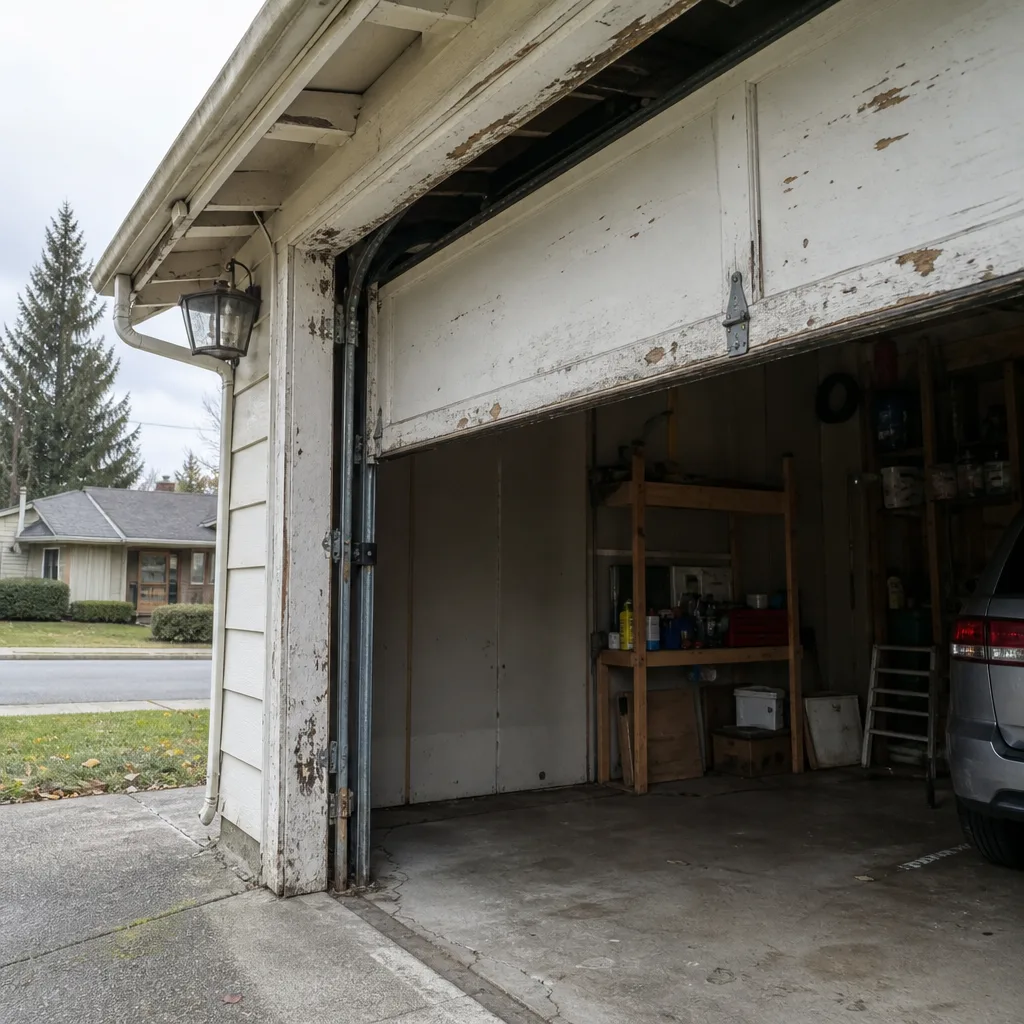 Before
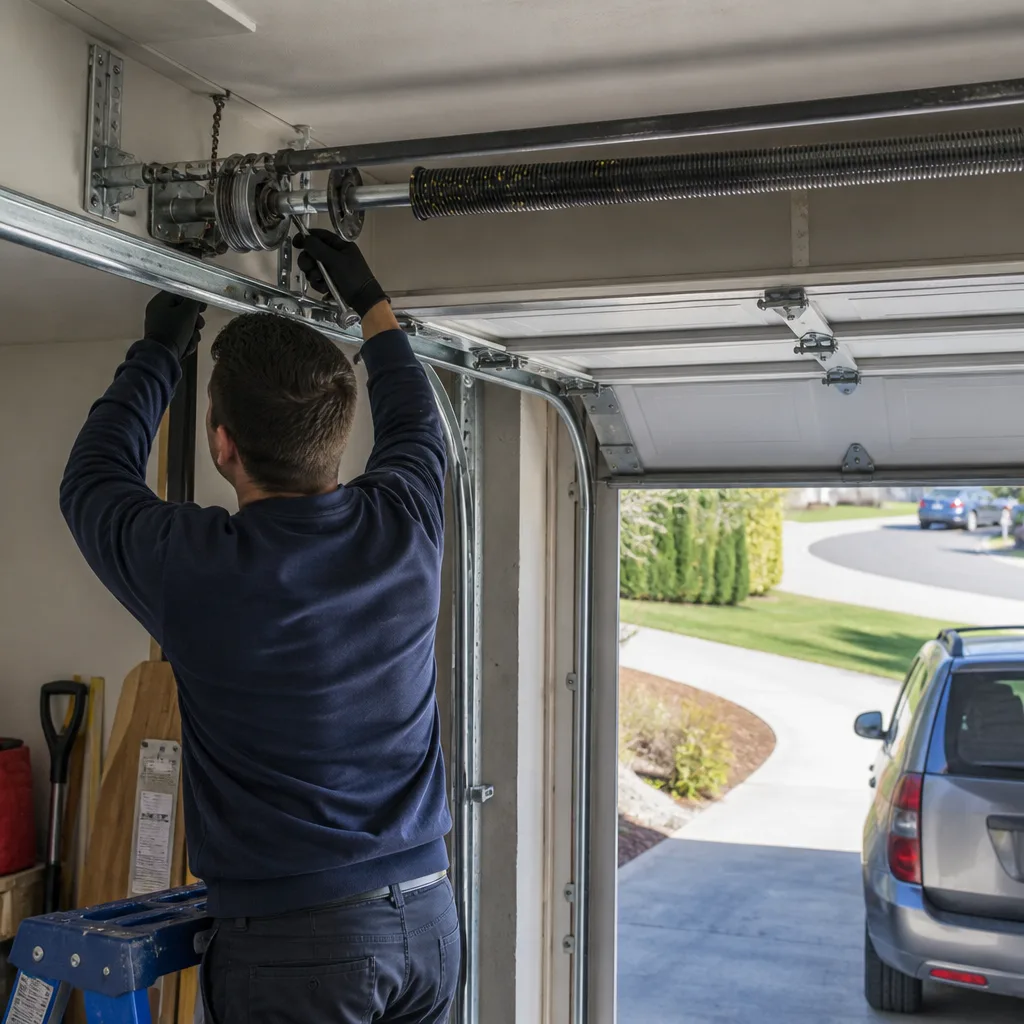 After
After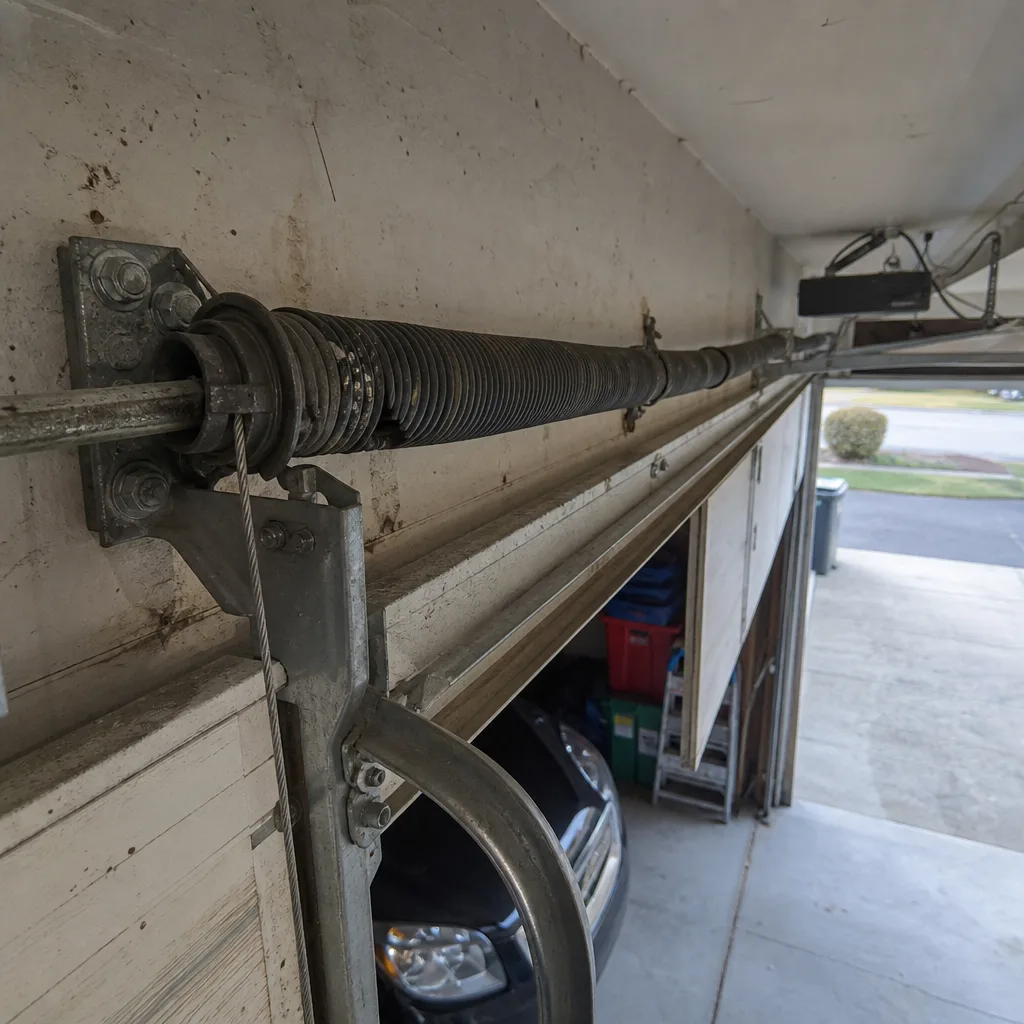 Before
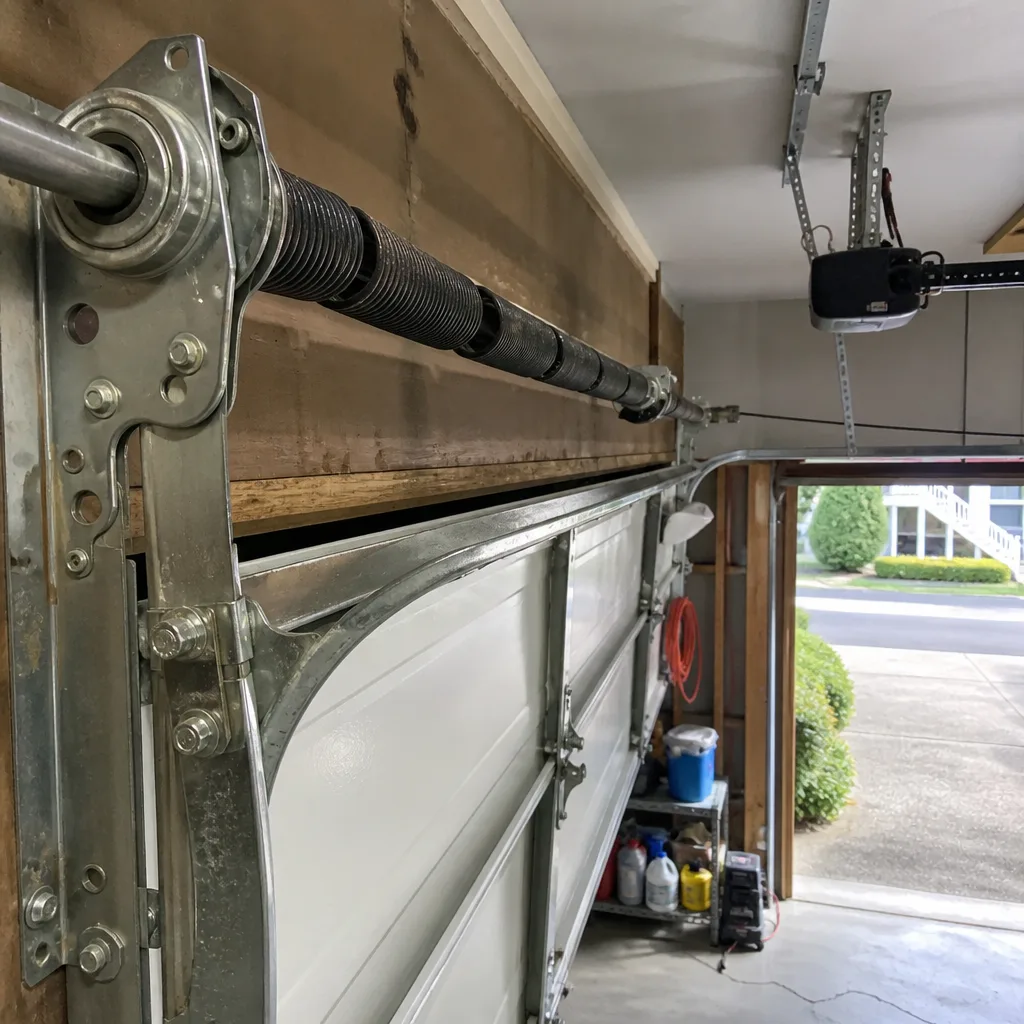 After
AfterSeasonal Garage Door Care for Tacoma: Year-Round Homeowner’s Guide
Tacoma averages only 12 days per year below freezing. So why do so many “winterize your garage door” guides fail us? They’re written for Minneapolis. Our real enemy is 38°F and 90% humidity, sustained for four months straight. That specific wet-cold alternation corrodes hardware faster than deep freeze, swells wood panels at the joints, and turns standard lubricants into gum that strains your opener’s motor. In this guide, you’ll learn what to check, when to check it, and how to document deterioration before it becomes an emergency repair call in Tacoma. For The Complete Guide to Garage Door in Tacoma and more guides & resources, see our blog.
Quick Answer
Seasonal garage door care in Tacoma means adjusting your maintenance calendar to our marine west coast climate: inspect weatherstripping and bottom seals before the rainy season starts in mid-October, switch to low-temperature grease before sustained 35°F periods, check wood panel joints for swelling in April after the wet season, and photograph hardware condition quarterly to track corrosion and wear trends over time.
Table of Contents
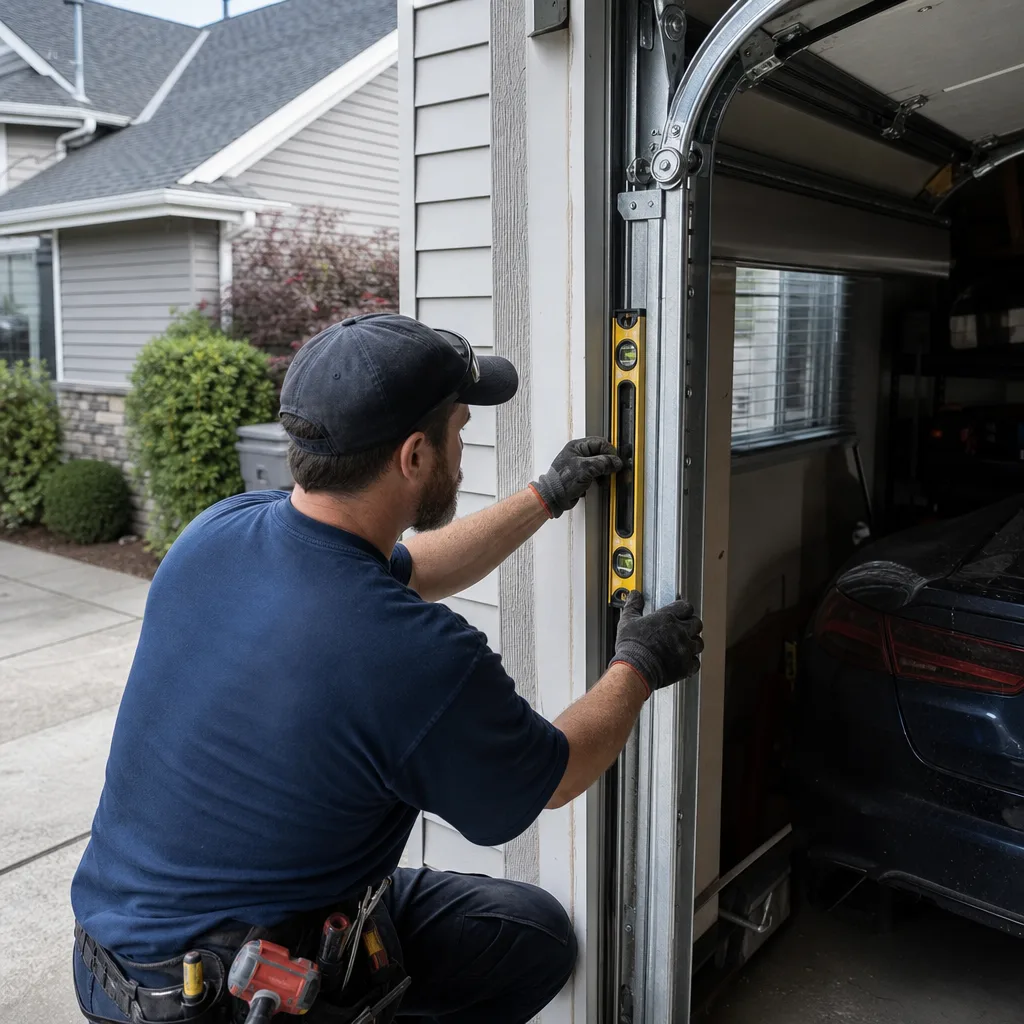
- Fall Maintenance: Preparing for Tacoma’s Rainy Season
- Winter Care: The Hidden Threat of Mild, Wet Cold
- Spring Inspection: What the Wet Season Left Behind
- Summer Upkeep: UV, Expansion, and Finish Damage
- Annual Documentation: The Seasonal Photo Habit
- Common Mistakes to Avoid
- When to Call a Professional
- Frequently Asked Questions
BeforeAfterFall Maintenance: Preparing for Tacoma’s Rainy Season
Tacoma’s rainy season doesn’t creep in. It arrives, typically between mid-October and the first week of November, when the jet stream shifts and we see 30 to 45 consecutive days with measurable precipitation. Your garage door is the largest moving barrier between that weather and your home. Fall maintenance isn’t about prevention in the abstract. It’s about specific, timed tasks that keep water and cold air outside where they belong.
The Three Fall Tasks We Prioritize in Tacoma
At Servo Garage Doors Tacoma home, we’ve found that three checks, done before Halloween, eliminate the majority of weather-related emergency calls we receive between November and February.
- Weatherstripping inspection. Run your hand along the vinyl or rubber seal where the door meets the frame. In Tacoma’s salt-air environment, especially in homes near Commencement Bay or the Narrows, UV exposure from our brief but intense summer sun degrades this material faster than inland climates. Look for cracking, hardening, or gaps where light shows through. Replacement weatherstripping for a standard 16-foot door runs $45-$85 in parts, and installation takes under 30 minutes with the right tools.
- Bottom seal compression test. Close the door on a piece of standard printer paper. You should feel resistance when pulling it out. If the paper slides freely, the seal isn’t compressing against the floor. In Tacoma’s older neighborhoods like North End and Proctor, settled concrete often creates a gap at one corner. A new bottom seal ($35-$75) or an adjustable threshold ($80-$140) solves this. Water pooling at the door threshold during fall rains is the signal that this test failed.
- Cable tension and hardware corrosion check. The lift cables that run from the bottom brackets to the torsion spring drums see accelerated corrosion in our humidity. Look for fraying, rust bloom, or kinking. Do not touch the cables themselves. The torsion spring above the door stores lethal tension, and cable adjustment requires training. What you can do: photograph the cable condition and the spring mounting brackets. If rust is visible, schedule service before the metal fatigues.
One pattern we’ve documented in Tacoma since 2015: cable failures spike in late November, when the first cold soaking combines with corrosion-weakened wire. The cable doesn’t snap during the cold snap. It snaps on the first hard lift afterward, when the opener’s initial torque shock loads the compromised strand.
Opener Settings for Seasonal Change
If you have a LiftMaster or Chamberlain chain-drive opener manufactured after 2018, check the force settings. These openers have a seasonal adjustment algorithm, but it assumes freeze-thaw cycles that tighten the door mechanism. Tacoma’s humidity cycle does the opposite: swollen wood panels and corroded rollers increase resistance in fall, then decrease it as things dry in spring. Manually test the door balance. Disconnect the opener by pulling the red release handle. The door should stay at half-open without drifting. If it falls or rises, the spring tension is off, and the opener is compensating with excess force that wears the internal gears.
Winter Care: The Hidden Threat of Mild, Wet Cold
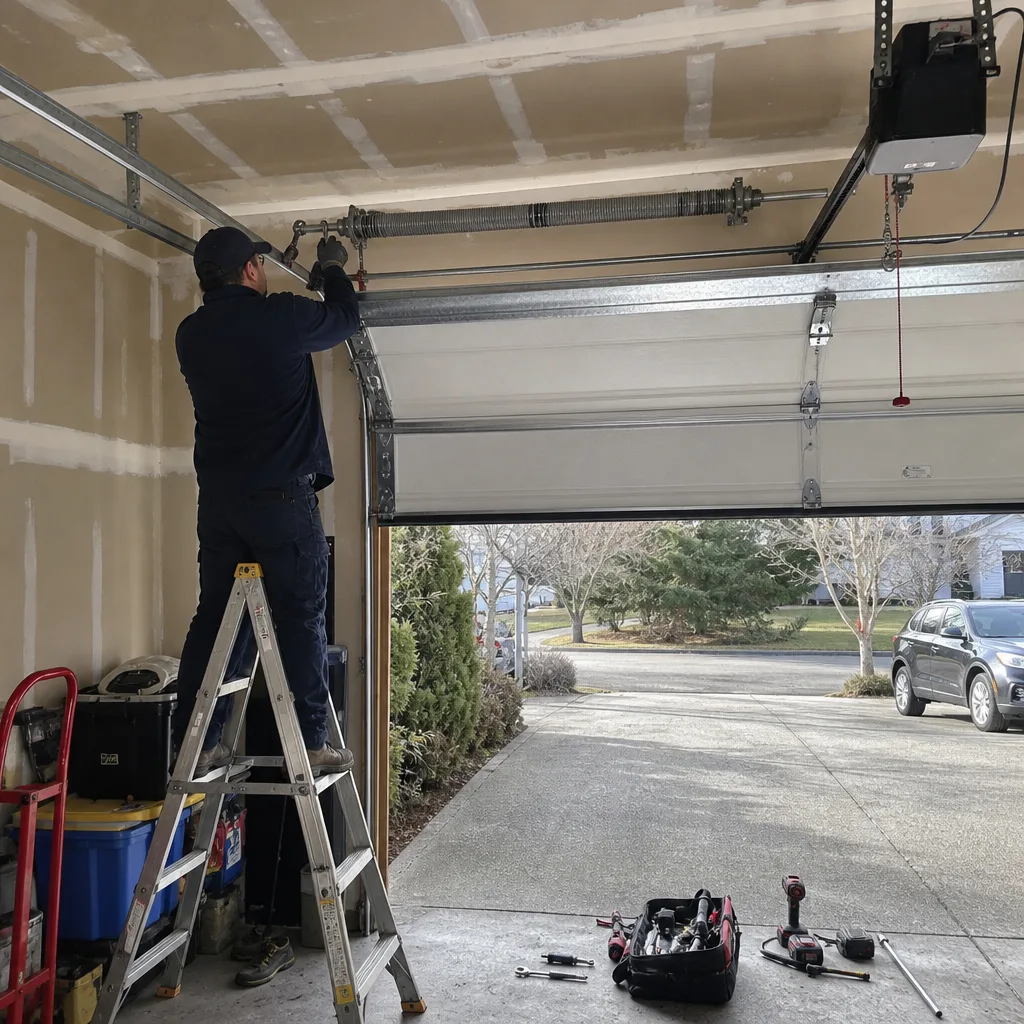
Here’s what the generic guides miss entirely. Standard garage door lubricant, the white lithium grease most homeowners grab at the hardware store, begins to thicken at 40°F. At 35°F, sustained over a week, it turns to a viscous paste that increases roller resistance by 30 to 50 percent. Your opener works harder, the logic board draws more amperage, and the thermal overload trips. Or worse, the opener’s plastic gears strip.
Tacoma spends January and February hovering between 34°F and 42°F. That’s our danger zone. Not cold enough to freeze pipes. Cold enough to change lubricant behavior without triggering the homeowner’s “winter prep” instinct.
Switch to Low-Temperature Grease
We use and recommend synthetic low-temperature grease rated to -20°F for all Tacoma installations. It costs roughly $12-$18 per tube versus $6-$9 for standard white lithium, and it maintains consistent viscosity through our entire winter range. Apply a pea-sized amount to each roller bearing, the hinge pivot points, and the torsion spring coils. Wipe excess. Over-greasing attracts grit, which acts as grinding compound.
For Genie screw-drive openers, the manufacturer specifies their own lubricant compound. Using generic grease on a screw drive voids the warranty and causes the carriage to bind in cold weather. We’ve replaced three Genie logic boards in Tacoma’s West End this past winter where the root cause was incorrect lubricant leading to stall-current overload.
The Condensation Problem
When outside air is 38°F and 90% relative humidity, and your garage interior is 48°F from the house’s radiant heat, condensation forms on the door’s interior surface. On uninsulated steel doors, this runs down the panels and pools at the bottom. On wood doors, it soaks into the lower panel joints. Both scenarios accelerate deterioration.
Check for condensation by running your hand across the door interior on a cold, wet morning. If it’s damp, increase ventilation or consider a dehumidifier. For steel doors, verify that factory-applied interior finish is intact. Bare metal spots rust from the inside out, and by the time you see exterior bubbling, the panel is structurally compromised.
What We Document in Winter Service Calls
When our technicians service doors in Tacoma during winter, the photo record includes: lubricant type found on the hardware, corrosion grade on cables and bottom brackets (we use a 1-4 scale developed in-house), and opener force test readings. This creates a baseline. Next season, we can show you exactly how much the hardware degraded, not just tell you it’s “wearing.”
Spring Inspection: What the Wet Season Left Behind
April in Tacoma brings a specific garage door problem that freeze-zone climates don’t experience: wood panel swelling from four months of moisture absorption, followed by rapid drying when our spring sun returns. Raised-panel wood doors, common in Tacoma’s 1920s-1950s housing stock in neighborhoods like Stadium and Hilltop, show this most clearly.
Measuring Panel Joint Gaps
When the door is closed, inspect the horizontal joints between panels. In fall, a properly fitted panel joint shows a consistent 1/16-inch gap. After wet season swelling, that gap may disappear entirely, with panels pressing against each other. As spring drying begins, the panels shrink back, but often unevenly. By late May, you may see gaps of 1/8 inch or more at the center joint, with tight contact at the edges.
This uneven gap pattern signals that the panel’s internal stile-and-rail joints are loosening. Water entered the end grain, the wood expanded and contracted beyond its design stress, and the glued joints inside the panel are failing. The measurement that matters: if any joint gap exceeds 3/16 inch when the door is closed and at rest, the panel’s structural integrity is compromised. Replacement is typically more cost-effective than repair for a single failed panel, and full door replacement becomes practical when two or more panels show this pattern. Check Garage Door Cost Breakdown: The Tacoma Homeowner’s Reference for 2026 for typical pricing.
Garage Door Installation in Tacoma costs for a standard 16×7 steel door range from $1,200-$2,400 depending on insulation rating and window configuration. We provide a flat, written price and written scope before any work begins - Clause 1 of The Haven Standard - so you know the full cost before deciding.
Hardware Recovery Check
Spring is also when to assess what winter did to metal components. The corrosion that started in November has had five months to progress. Check specifically:
- Bottom brackets: These steel brackets attach the lift cables to the door’s bottom section. They’re the lowest point on the door and see the most water exposure. Look for rust scaling, not just surface discoloration. Scaled rust indicates pitting, and pitted brackets have reduced load capacity.
- Track mounting bolts: The vertical tracks are held to the door frame by lag bolts into wood framing. In Tacoma’s humidity, these can rust-seize. Attempting to adjust track alignment with seized bolts risks snapping the bolt or stripping the wood. We see this frequently in homes near the waterfront where salt air accelerates corrosion.
- Torsion spring anchor bracket: The bracket that secures the spring tube to the header above the door carries the full spring torque. Corrosion here is dangerous because it weakens the anchor without visible warning. A failed anchor bracket releases spring tension unpredictably. This is not a homeowner inspection point - it’s a technician check during scheduled service.
Opener Strain Assessment
If your opener struggled through winter, spring is when internal damage shows. The extra force required to move poorly lubricated or corroded hardware wears the nylon gears in chain-drive and belt-drive openers. Listen for grinding on startup, or a delay between motor activation and door movement. Both indicate gear wear. Garage Door Opener Repair & Installation in Tacoma typically runs $180-$450 for gear replacement, or $550-$1,200 for full opener replacement with a modern unit featuring battery backup and WiFi connectivity.
Summer Upkeep: UV, Expansion, and Finish Damage
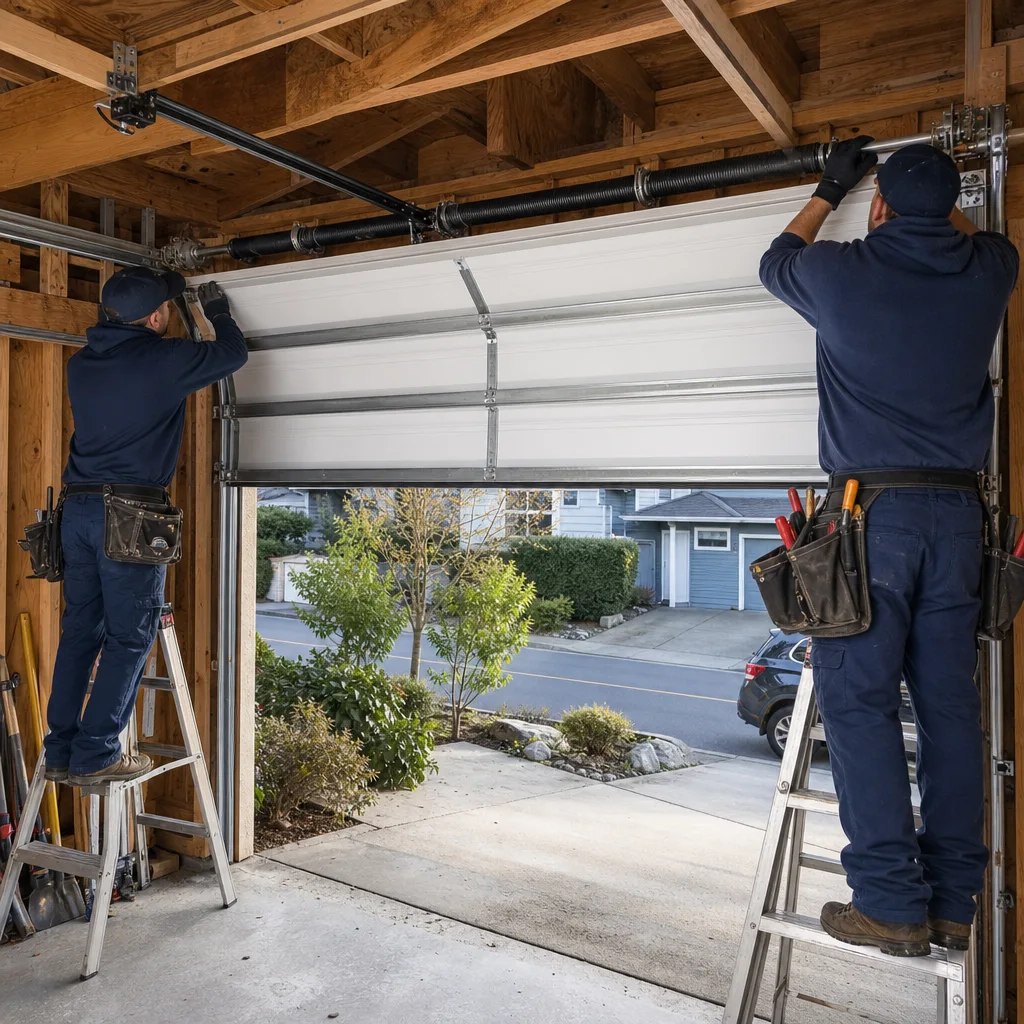
Tacoma’s summer sun is brief but intense. June through September, we get 15 to 16 hours of daylight with clear-sky UV index peaks that match Phoenix on our hottest days. The difference: our sun comes at a lower angle, hitting the south and west faces of garage doors directly during afternoon hours. This creates asymmetric UV exposure that fades and degrades finishes unevenly.
Steel Door Finish Assessment
Factory-finished steel doors carry a baked-on polyester or fluoropolymer coating rated for UV resistance. In Tacoma, we’ve found that south-facing, unshaded doors show chalking - a powdery surface degradation - in 7 to 10 years. West-facing doors in the 10 to 14 year range. North and east-facing doors often last 15+ years before refinishing is needed.
Chalking is the signal. Run your hand across the door surface. If you get a white or light-colored residue on your palm, the UV protective layer is degrading. At this stage, refinishing with a quality exterior acrylic latex ($200-$400 in materials for a two-car door) extends life by 5 to 8 years. Delay, and the bare steel begins rusting from pinhole failures in the coating. Once rust is visible, panel replacement or full door replacement is the only durable solution.
For Clopay steel doors with their factory Ultra-Grain woodtone finish, refinishing requires specific primer compatibility. Generic metal primers react with the factory coating and cause peeling. We’ve documented three cases in Tacoma’s North End where homeowner refinishing attempts accelerated rather than prevented deterioration.
Thermal Expansion Cycles
Tacoma’s summer temperature swing is 25 to 35 degrees between morning low and afternoon high. Steel doors expand and contract with this cycle, stressing the hinge points and roller brackets. The symptom: popping or clicking sounds during the first morning operation, when the contracted door binds slightly against the tracks until movement warms and expands the metal.
This is normal to a degree. Persistent binding, or binding that worsens through summer, indicates misaligned tracks or worn rollers. The roller wheels, typically nylon with steel ball bearings, see accelerated wear when the door binds repeatedly. A single failed roller increases load on the remaining five, creating a cascade failure pattern.
Concrete and Foundation Settlement
Summer is dry season in Tacoma. Soil moisture drops, and the expansive clay soils in parts of South Tacoma and the Eastside shrink. This can shift garage slabs, changing door alignment. If your door showed no binding in spring but develops it by August, check the floor seal gap across the full door width. A gap that varies by more than 1/4 inch from one side to the other suggests slab movement, not door wear.
Annual Documentation: The Seasonal Photo Habit
This is the practice almost no homeowner follows, and it’s the single most impactful change you can make to your garage door maintenance. Four photos per year, taken on the first day of each season, create a visual record that reveals deterioration trends invisible in any single inspection.
What to Photograph
- Full door, exterior, closed. Stand across the street or driveway. This shows panel alignment, finish condition, and any obvious damage. Compare spring to spring for fading patterns.
- Full door, interior, closed. Light from inside the garage shows gaps at the sides and bottom that exterior lighting hides. This is your weather seal effectiveness record.
- Hardware close-up, left side. Focus on the bottom bracket, lower hinge, and the cable attachment point. Use your phone’s flash. Corrosion is more visible with direct light.
- Hardware close-up, right side. Same framing, same lighting. The comparison between left and right reveals asymmetric wear patterns that indicate specific problems - a failing roller on one side, water intrusion from a downspout on one corner, etc.
How to Store and Use the Record
Create a dedicated album on your phone. Name each photo with the date and season: “2025-03-20 Spring.” The value emerges over years. When a technician tells you a cable “needs replacement soon,” you can compare to last season’s photo and see whether the corrosion is new or stable. When considering door replacement, you can show prospective contractors exactly how the finish degraded, not just describe it.
This practice directly extends what we do at Servo Garage Doors Tacoma. Our documented photo record on every visit - Clause 4 of The Haven Standard - gives customers evidence of what we found and what we did. Your seasonal photos complement ours, creating a complete ownership history that increases home value and eliminates dispute.
We’ve seen this save Tacoma homeowners significant money. In 2023, a customer in Fircrest showed us three years of seasonal photos revealing that a “sudden” cable failure was preceded by visible corrosion progression that a previous contractor had dismissed as “surface rust, nothing to worry about.” The photos made the case for warranty coverage on the prior repair.
Common Mistakes to Avoid
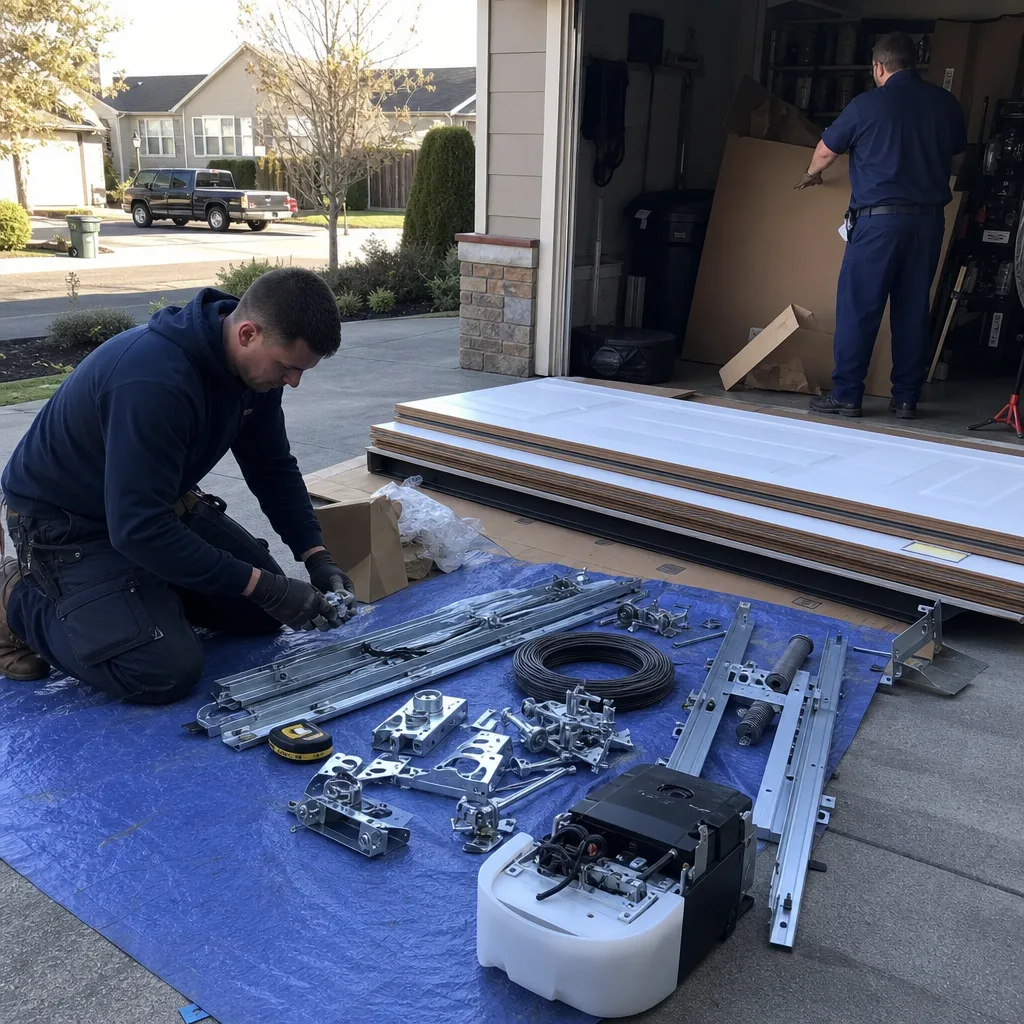
- Using WD-40 as garage door lubricant. WD-40 is a solvent and water displacer, not a lubricant. It strips existing grease, evaporates in 48 hours, and leaves metal bare. In Tacoma’s humidity, bare metal rusts within a week. Use synthetic garage door grease, not spray penetrant.
- Ignoring the door balance because “it still opens.” An unbalanced door forces the opener to lift 20 to 40 pounds of dead weight it wasn’t designed for. The motor overheats, the gears strip, and you’re replacing a $600 opener instead of a $200 spring adjustment. Test balance quarterly by disconnecting the opener and lifting manually.
- Power-washing the door to “clean” it. High-pressure water forces moisture into panel joints, behind weatherstripping, and through screw holes. In Tacoma’s climate, this trapped moisture doesn’t dry before mold or corrosion starts. Use a soft brush and mild detergent, rinse with a garden hose, and dry with a towel.
- Adjusting torsion spring tension from a YouTube tutorial. The torsion spring above your door stores enough energy to cause serious injury or death. Winding bars can slip, springs can break unpredictably, and improper tension damages the door and opener. This is not a DIY task in any climate, and Tacoma’s corrosion-accelerated spring fatigue makes it especially hazardous.
- Waiting for total failure before calling. The “sudden” garage door failure is almost never sudden. It’s the endpoint of a visible deterioration curve that was ignored. The seasonal photo habit reveals this curve. So does a professional inspection, which costs nothing if you use our Free Second Opinion on any competing written estimate.
- Applying car wax to a steel door. Automotive wax contains abrasives and solvents that degrade factory door finishes. The UV protection is formulated for horizontal hoods, not vertical panels with different expansion patterns. Use products specified for garage doors, or consult the manufacturer.
- Assuming all openers need the same maintenance. Chain-drive, belt-drive, screw-drive, and direct-drive openers have distinct maintenance requirements. A LiftMaster belt drive needs no lubrication on the rail. A Genie screw drive needs specific compound every two years. Check your manual, or have a technician verify during service.
When to Call a Professional
Some conditions require trained assessment regardless of your maintenance skill. Call for service if you observe: a torsion spring with any visible gap or separation in the coils; a lift cable with more than three visible broken strands; a door that has shifted in its tracks or operates with visible panel misalignment; an opener that reverses intermittently or shows erratic behavior; or any hardware component with scaled rust or pitting.
These are not “watch and wait” conditions. A failed torsion spring or cable can drop a 150-pound door without warning. The safety risk is real, and the repair requires specific tools and training.
Garage Door Repair in Tacoma from Servo Garage Doors Tacoma includes a flat, written price and written scope before any work begins - Clause 1 of The Haven Standard - plus the documented photo record showing what we found and what we did. We offer free estimates in Tacoma. Call (253) 666-6264.
Frequently Asked Questions
Professional inspection and adjustment once per year is the minimum for Tacoma’s wet climate, with homeowner visual checks each season change. The marine west coast humidity accelerates corrosion beyond what annual service alone can catch. Our 18,000+ service records since 2015 show that customers on a twice-yearly schedule (fall and spring) experience 60% fewer emergency calls than those on annual-only maintenance.
Corroded lift cables failing in late fall, when the first sustained cold period combines with five months of humidity-driven rust. The cable doesn’t fail from cold alone. It fails because corrosion reduced its cross-section through summer and fall, then the metal’s reduced ductility at lower temperature makes it brittle. We see this spike consistently in the week before Thanksgiving.
Homeowners can apply lubricant to accessible hinge points and roller bearings safely. Do not attempt to lubricate the torsion spring, the cable drums, or the opener’s internal gears. More importantly, most homeowners apply too much lubricant or the wrong type. Excess grease attracts grit. Wrong grease thickens in our mild winter and increases opener strain. If you’re uncertain, schedule a service call - the cost of proper lubrication is less than the cost of replacing a stripped opener gear.
A professional tune-up and safety inspection in Tacoma typically ranges from $120-$180, depending on door size and accessibility. This includes balance testing, hardware torque verification, safety sensor alignment, track inspection, and lubrication with appropriate compounds. Repairs found during inspection are quoted separately with a flat, written price before any additional work. Call (253) 666-6264 for an exact quote - estimates are free.
Three factors converge in Tacoma winters: thickened lubricant increasing roller resistance, metal contraction creating slight track misalignment, and moisture-induced swelling in wood doors or wooden frame components. The noise is usually metal-on-metal contact at the hinge points or rollers binding in the track. Low-temperature synthetic grease and seasonal hardware adjustment eliminate most winter noise.
Not automatically. A well-maintained door in good cosmetic condition adds curb appeal without requiring replacement. However, if the door shows visible rust, delaminating panels, or operates noisily, replacement typically returns 85-95% of cost in sale price according to local real estate data. We provide a documented condition assessment - our standard photo record - that you can present to buyers as evidence of maintenance, or use to justify replacement if needed. For installation options, see our Garage Door Installation in Tacoma page.
Yes. Servo Garage Doors Tacoma services all major brands including LiftMaster, Chamberlain, Genie, Clopay, Amarr, Wayne Dalton, Craftsman, and Raynor. Our technicians carry common parts for these brands on every truck, and we background-check and uniform every technician who arrives at your home. The license number is visible on our documentation, not buried in fine print.
The Bottom Line
Tacoma’s garage doors face a specific climate threat: not deep freeze, but sustained wet cold that corrodes, swells, and degrades on a timeline different from freeze-zone patterns. Effective seasonal care means a mid-October weather seal and hardware check, low-temperature lubricant before January, wood panel inspection in April, UV and finish assessment in July, and quarterly photography that makes deterioration visible before it becomes failure. The homeowners who follow this calendar avoid the emergency repair calls that spike in late November and early March. Explore more guides & resources on our blog to keep your door running smoothly year-round. Those who don’t, call us then - and we answer, 24 hours a day, with a live person, a named technician, and a flat written price before any work starts.
Written by Marcus Deller, Owner at Servo Garage Doors Tacoma, serving Tacoma since 2015.