
Last updated September 21, 2026
Full 25-point door and opener safety check with every visit - springs, cables, rollers, tracks, and your LiftMaster or Chamberlain opener included
You get a price before we start. It does not change when the truck arrives.
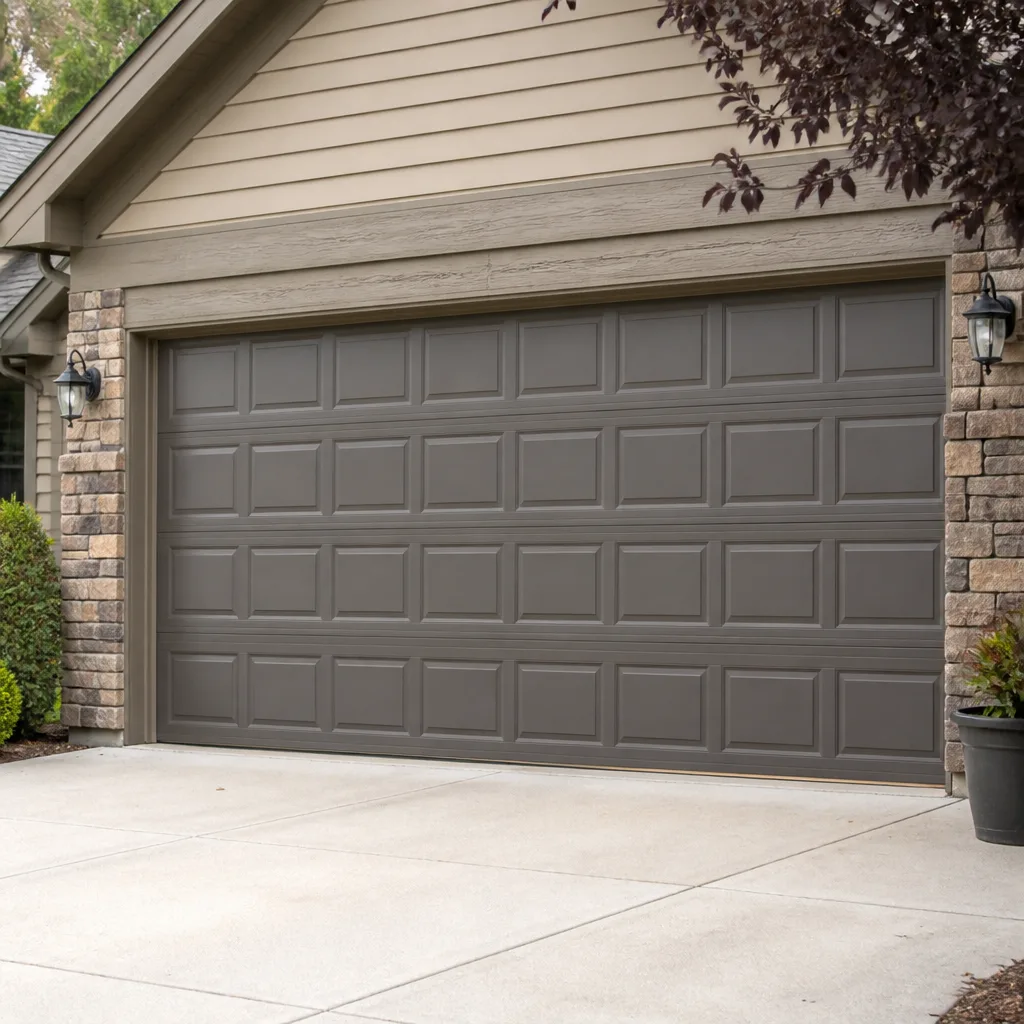
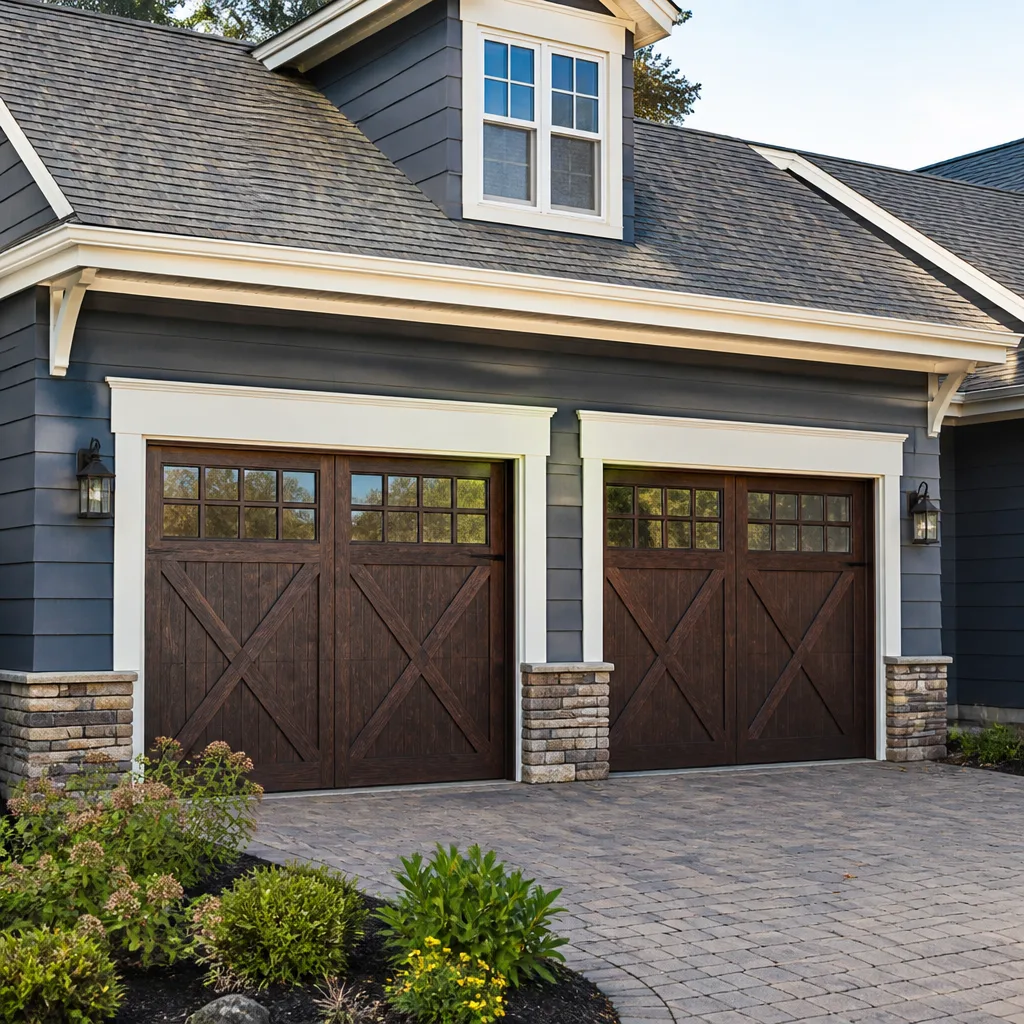
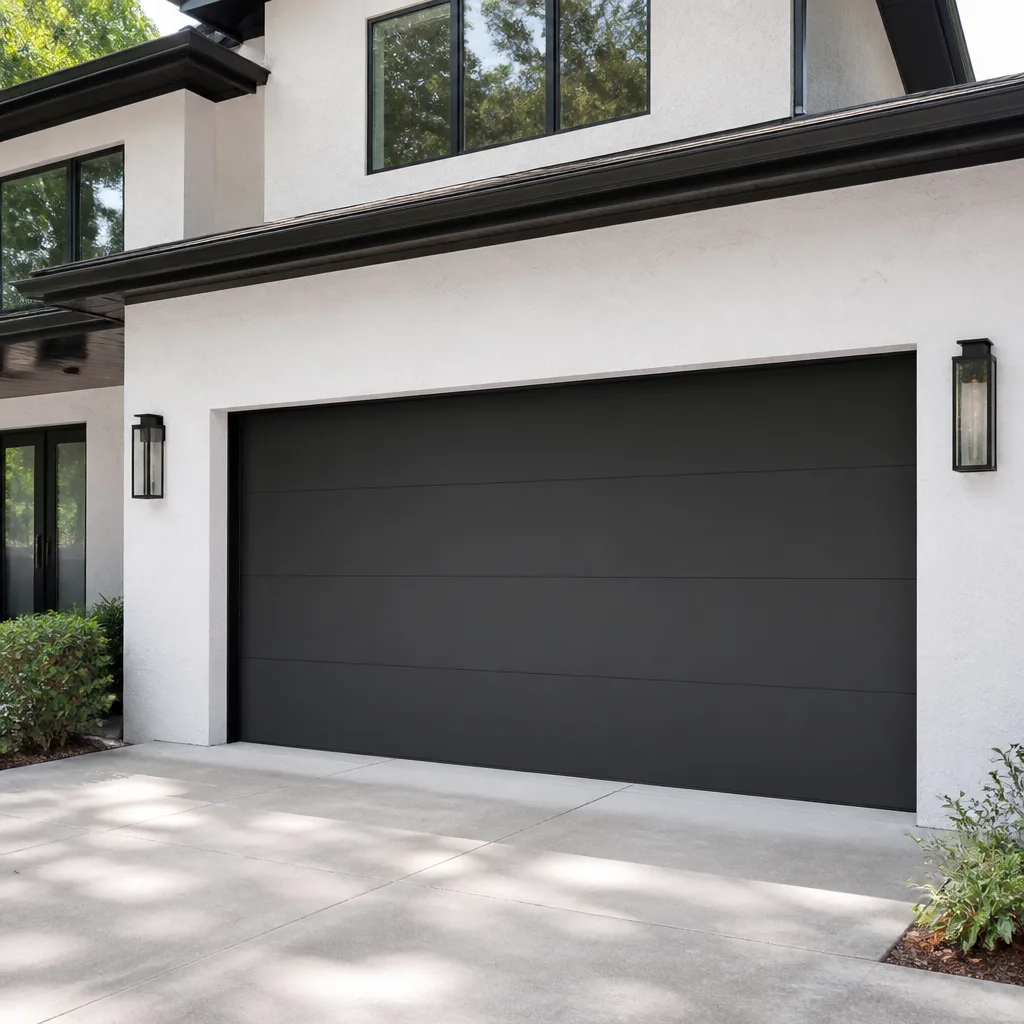
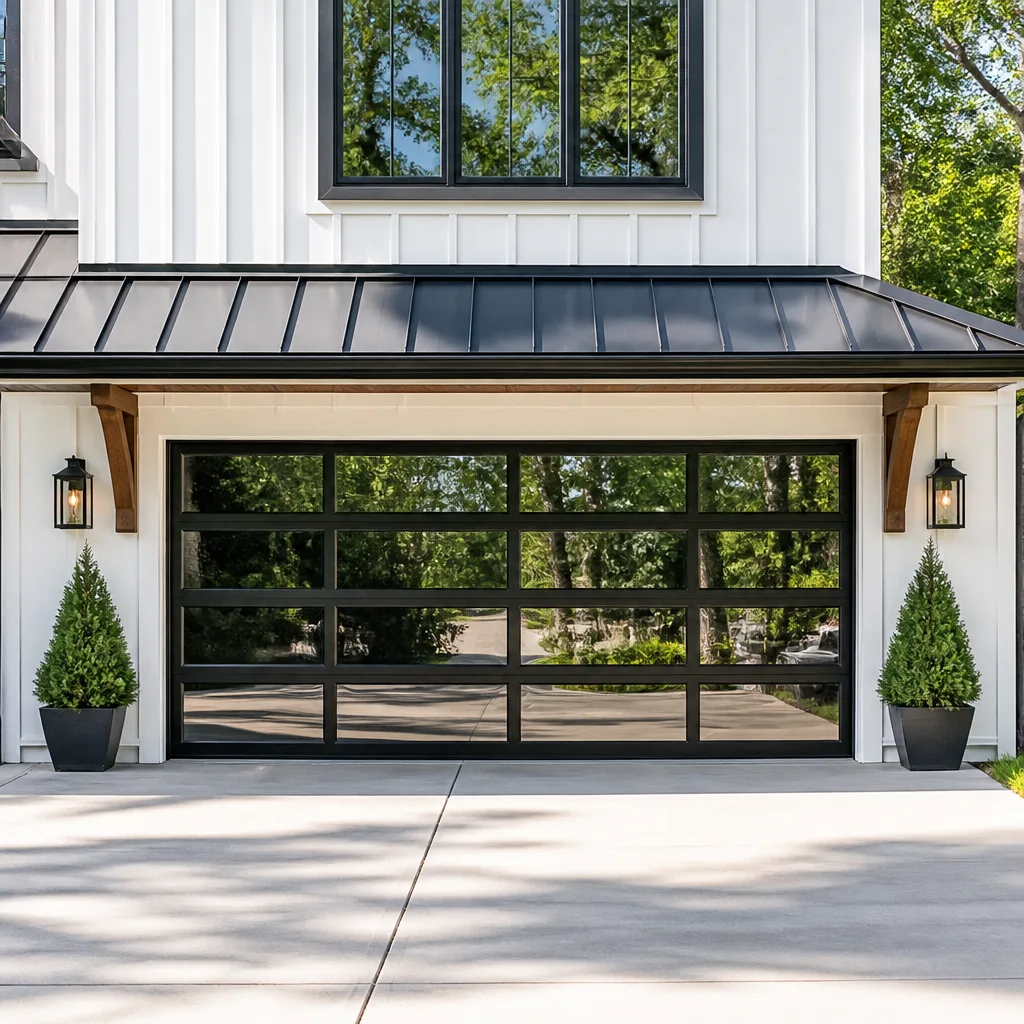
 Before
 After
After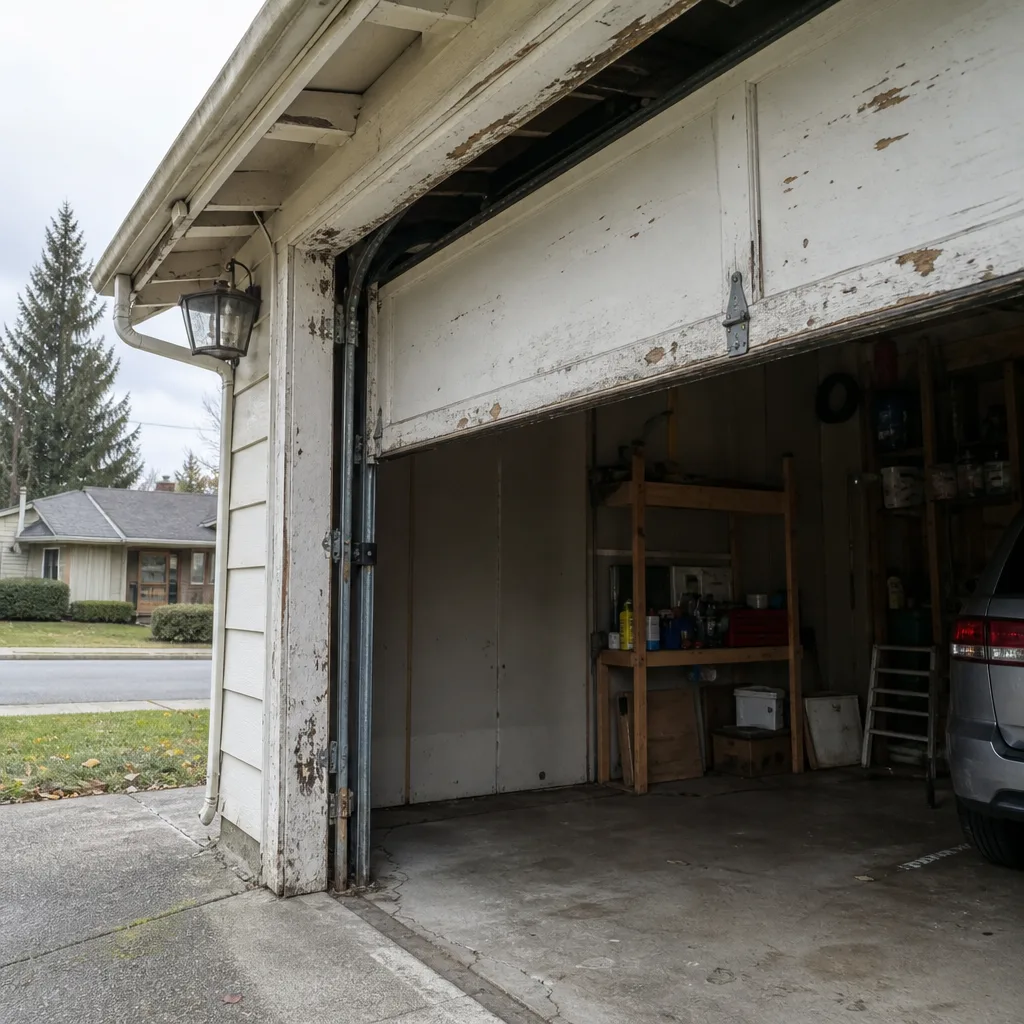 Before
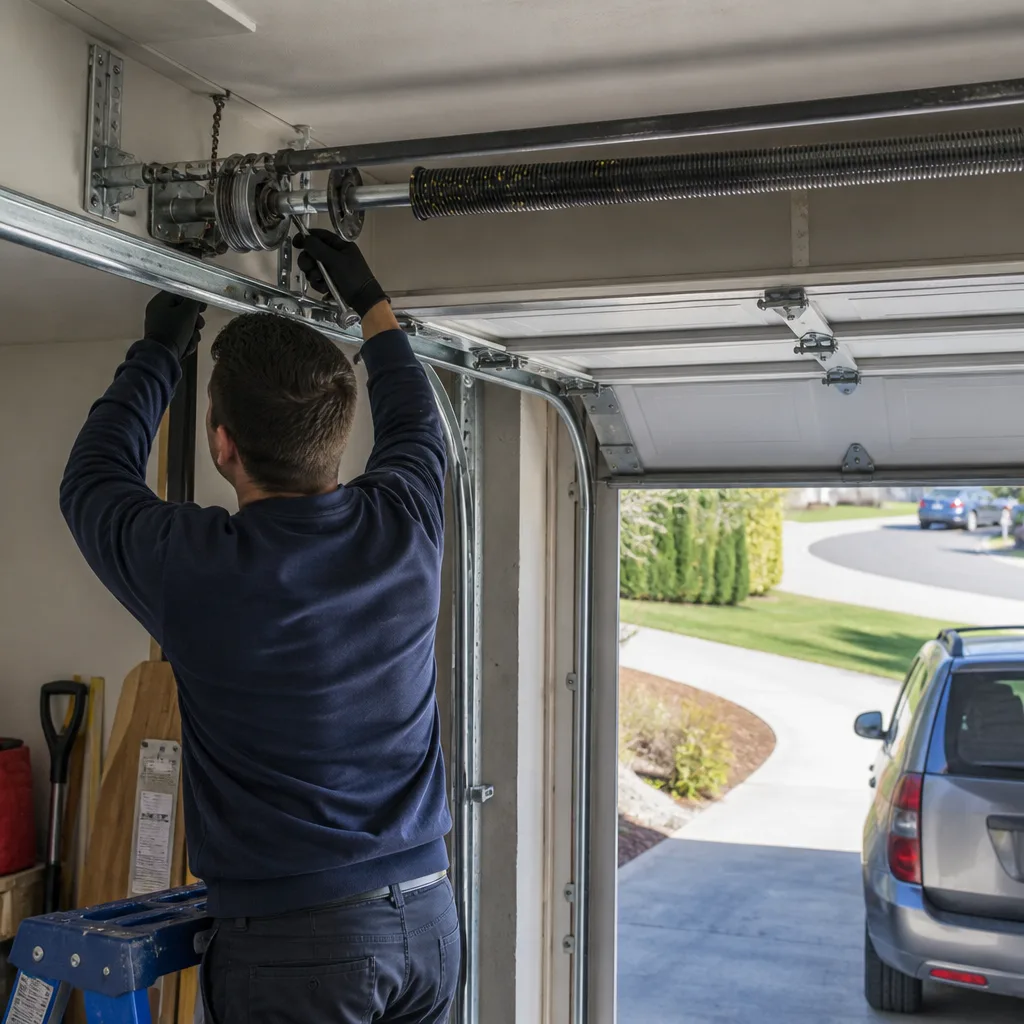 After
After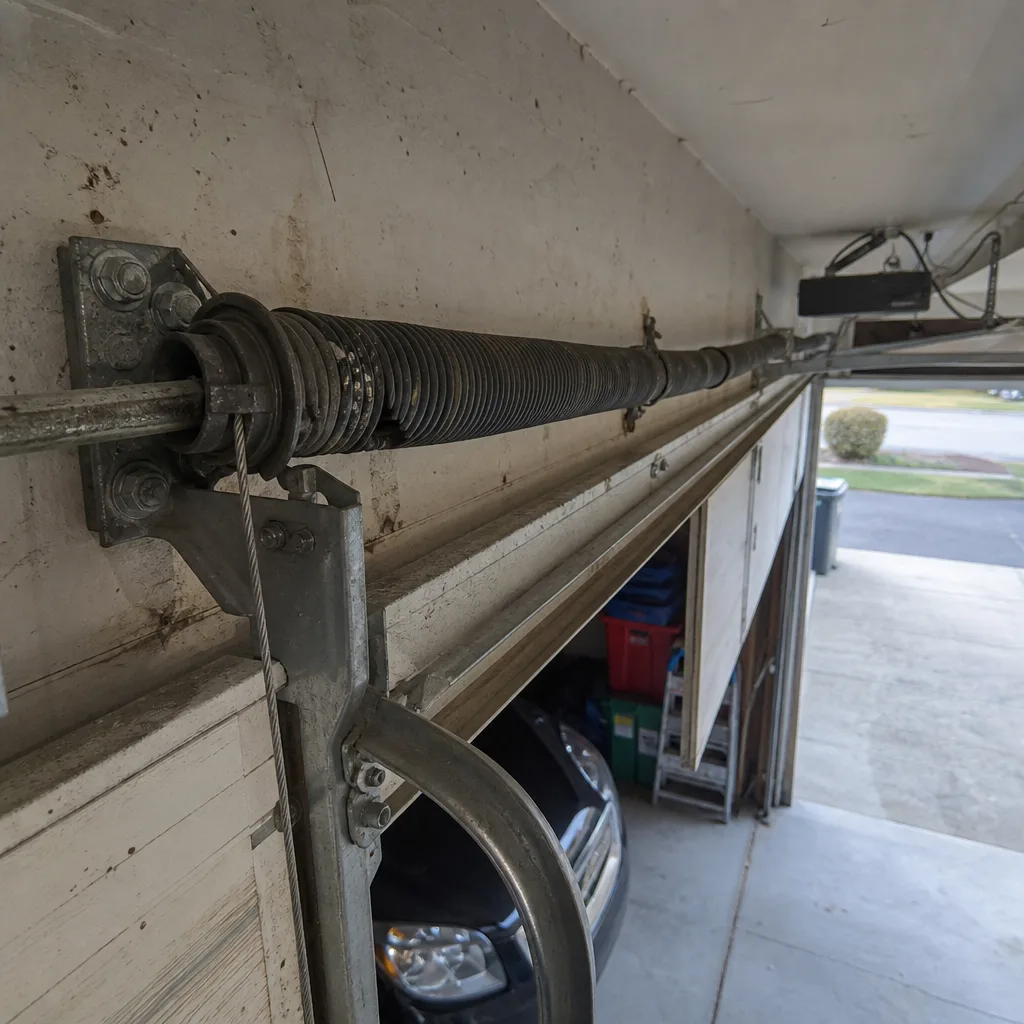 Before
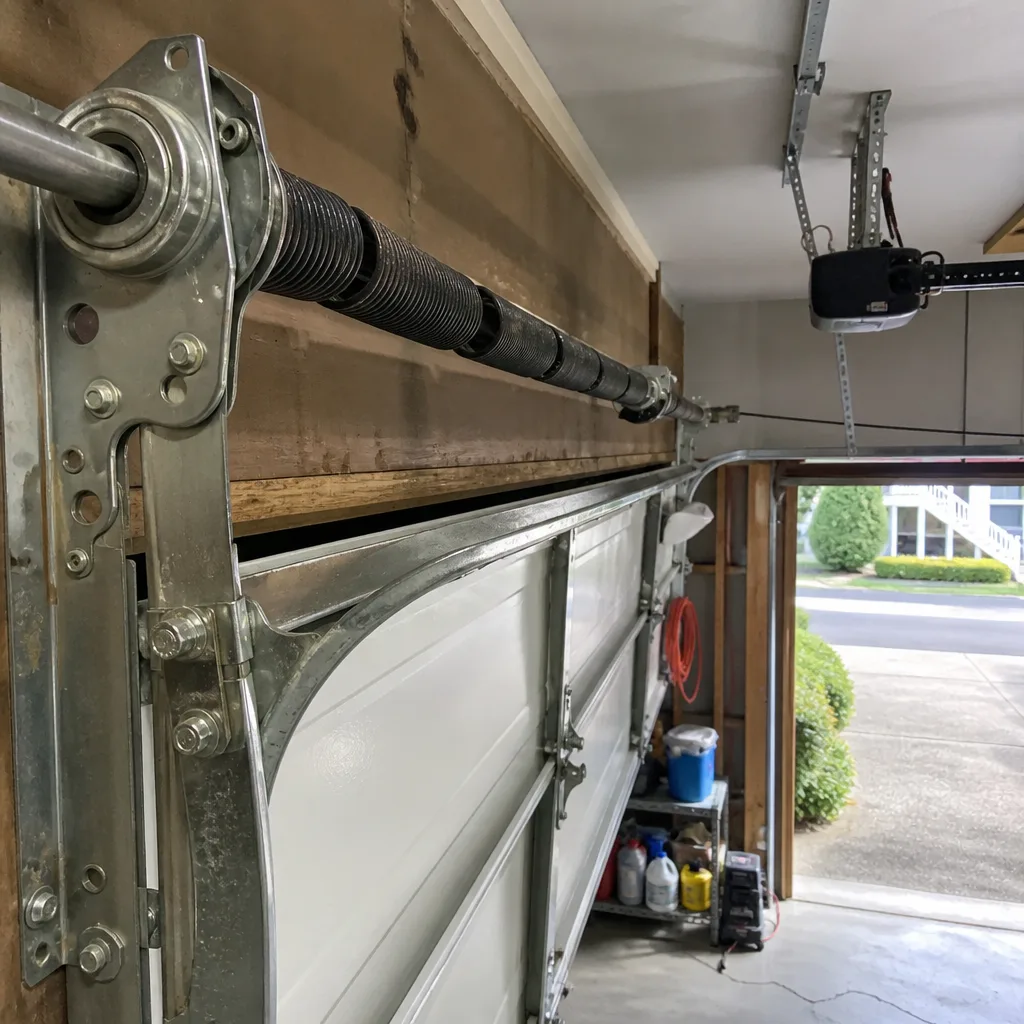 After
AfterGarage Door Warning Signs: A Tacoma Homeowner’s Reference Guide
Here’s something that keeps our technicians busy in Tacoma: a garage door that reverses unexpectedly gets described the same way by homeowners whether the fix is a misaligned photo-eye (zero dollars, five minutes) or a failing torsion spring (stop using the door immediately, potential safety hazard). The symptom sounds identical. The response is not. Since 2015, we’ve documented over 18,000 garage door calls, and the pattern repeats - warning signs get ignored because no one taught homeowners how to rank them by urgency. This guide - along with our Complete Guide to Garage Door in Tacoma - separates the signs that mean stop using the door today from the signs that give you a 90-day window, with the specific component implicated by each. You’ll learn what to look for, how to confirm it without getting hurt, and what documentation to gather before you call anyone.
Quick Answer
Garage door warning signs fall into three urgency tiers: Tier 1 (stop use now - broken spring, frayed cable under tension, cracked bottom bracket), Tier 2 (schedule within two weeks - slow response, intermittent remote failure, seal gaps), and Tier 3 (monitor and log - cosmetic rust, minor panel dents, fading paint). The same symptom can indicate wildly different problems, so this guide - and our step-by-step guide to hiring a garage door contractor in Tacoma - maps each warning sign to its specific component and required response.
Table of Contents
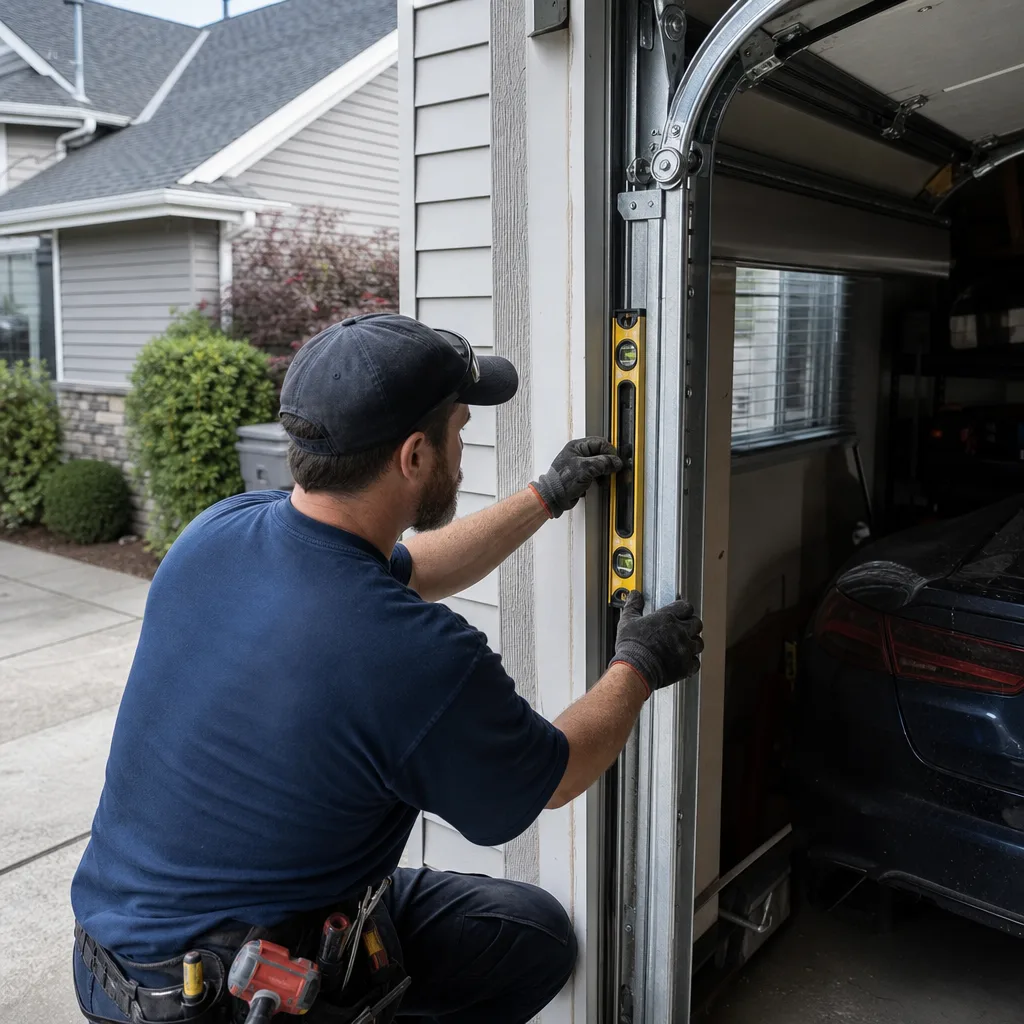
- Tier 1: Stop Use Immediately - These Signs Mean the Door Is Unsafe
- Tier 2: Schedule Within Two Weeks - Component Failure in Progress
- Tier 3: Monitor and Log - Early Warning Signs to Track
- Symptom-to-Component Mapping: What Each Noise Means
- Tacoma-Specific Corrosion and Climate Warning Signs
- Documentation Protocol: Photograph Before You Call
- Common Mistakes to Avoid
- When to Call a Professional
- Frequently Asked Questions
BeforeAfterTier 1: Stop Use Immediately - These Signs Mean the Door Is Unsafe
These four conditions create genuine injury risk. Do not operate the door. Do not try to “test” it. Disconnect the opener if you can do so without standing under the door or near the spring assembly.
Broken Torsion Spring
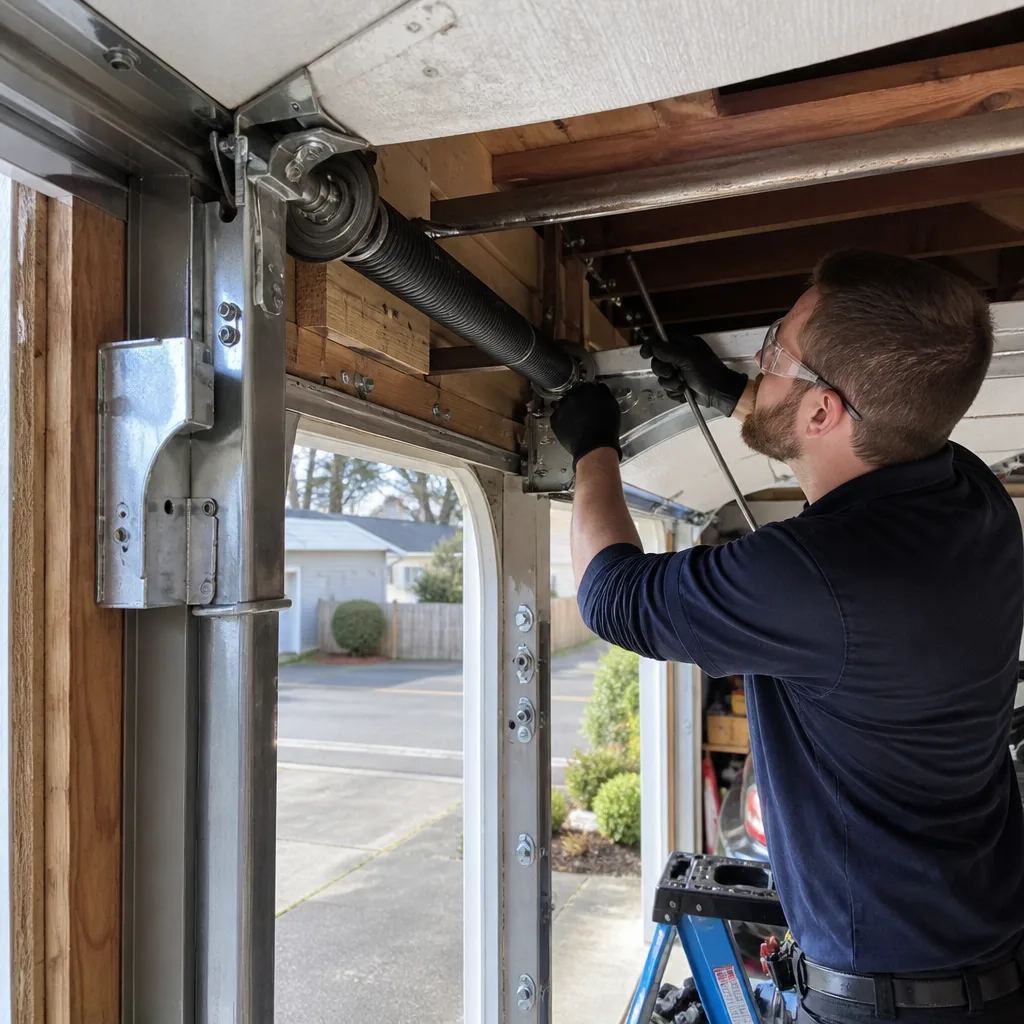
The torsion spring sits horizontally above the door, wound tight with enough stored energy to lift 150 to 400 pounds of door weight. When it breaks, you’ll usually hear a loud bang from the garage. The door may feel impossibly heavy to lift manually, or it may slam shut if already in motion.
Here’s how to confirm a broken torsion spring without touching anything under tension: look at the spring anchor bracket in the center of the header. A healthy spring has a continuous coil. A broken spring shows a visible gap, typically a clean separation with the two ends separated by one to three inches. In some cases the spring binds on itself and the gap is less obvious - look for a “lazy” coil that doesn’t follow the same tight spiral as the rest. On a two-spring system, one broken spring may still allow the opener to function, but it’s straining the motor and the remaining spring. Either way, stop use.
Why this matters in Tacoma: Our marine climate accelerates spring corrosion. The salt air from Commencement Bay and Puget Sound penetrates the galvanized coating on springs faster than inland climates. We’ve replaced springs in the North End that showed significant surface rust after just four years, where the same spring in a drier climate might last eight. The rust creates stress risers that initiate fractures.
Torsion spring replacement in Tacoma typically runs $180-$340 for a standard residential door, including the spring, winding cones, and labor. We quote this flat, in writing, before touching anything - Clause 1 of The Haven Standard.
Frayed or Unwinding Cable
The lift cables run vertically from the bottom brackets to the cable drums at each end of the torsion tube. They’re under constant tension equal to the door weight. A frayed cable - visible as broken strands sticking out like a broom - can fail without warning. An unwinding cable, where the cable has slipped off the drum and hangs loose, means the door is supported on one side only.
Do not attempt to rewind a cable yourself. The drum is under spring torque. A slipping wrench or miscalculation releases that energy instantly. This is not a DIY repair.
Cracked or Broken Bottom Bracket
The bottom bracket attaches the lift cable to the bottom of the door. It’s the highest-stress connection point on the entire system. A crack in the bracket casting, or visible movement where the bracket meets the door section, means the cable could pull free. The door would then drop on that side, potentially twisting in the tracks.
Door Off Track with Binding or Jamming
If a door roller has jumped the track and the door is visibly crooked in the opening, do not force it. The remaining rollers and hinges are carrying loads they weren’t designed for. Forcing the door can bend the track, damage sections, or cause the entire door to fall out of the frame.
Safety caveat: If you need to secure a car inside or outside, use a side door or window. Never stand under or near a door with any Tier 1 condition.
Tier 2: Schedule Within Two Weeks - Component Failure in Progress
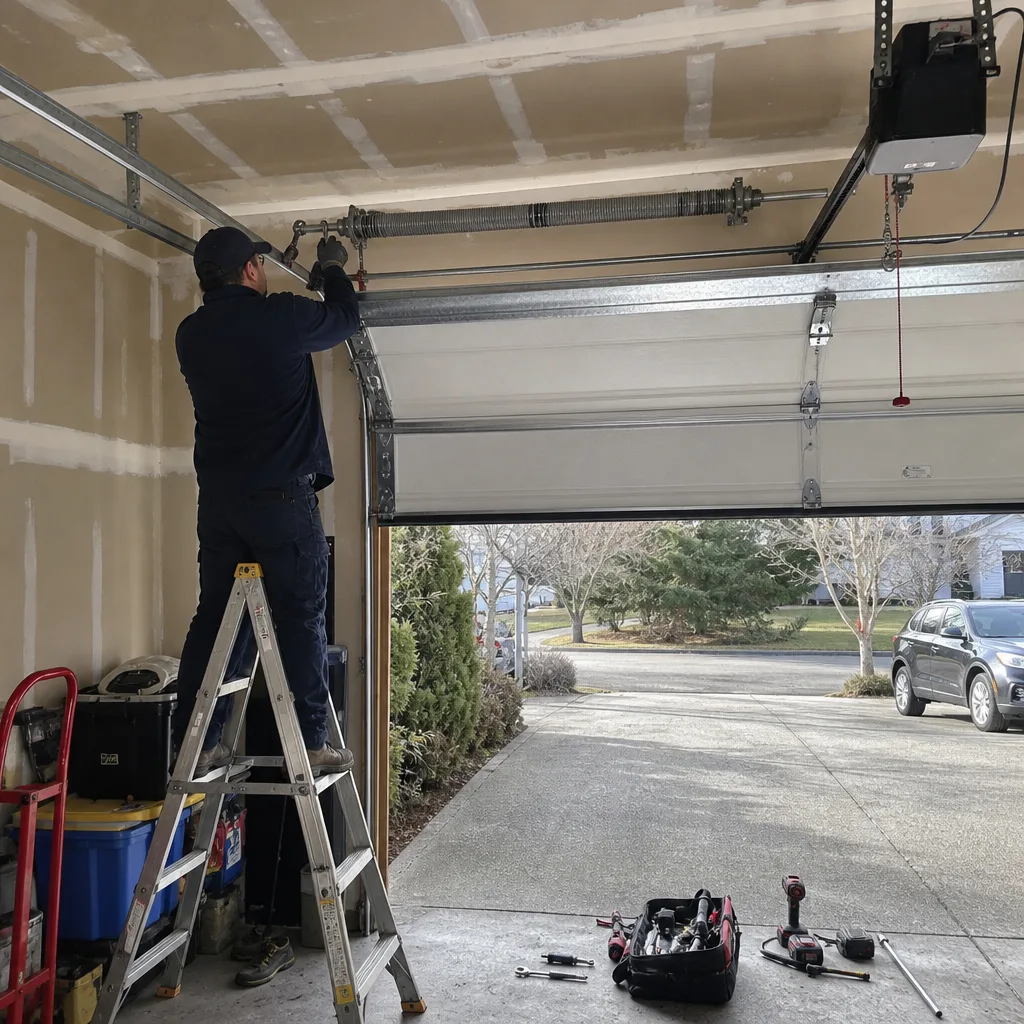
These signs indicate a component that’s failing but hasn’t created immediate danger. You can use the door with caution, but the failure is progressive. Schedule service within two weeks to avoid escalation to Tier 1.
Slow or Sluggish Door Response
A door that takes noticeably longer to open or close - say, 15 seconds instead of the usual 8 to 12 - often indicates opener motor wear, a failing logic board, or degraded rollers creating drag. In Tacoma’s damp climate, we’ve seen roller bearings seize after winter moisture penetrates the seals. The opener works harder, overheats, and eventually fails.
Check the opener’s LED diagnostic code if it has one (most Chamberlain and LiftMaster units flash a pattern). But don’t let the code be your only guide - a slow door with no error code still needs inspection.
Intermittent Remote or Wall Button Failure
If the door responds to the wall button but not the remote, or works only at close range, the issue is likely the remote battery, the receiver antenna, or interference. But if both controls fail intermittently, the logic board may have cold solder joints or capacitor degradation. This progresses to total failure.
In the Proctor and North Slope neighborhoods, we’ve traced intermittent failures to LED light bulbs in garage door openers. Some brands emit radio frequency interference in the 315 or 390 MHz range used by garage door remotes. Swap the bulb first - it’s a $5 test.
Visible Gap Between Door and Floor
A seal gap lets water, rodents, and cold air into the garage. But it also indicates settling, frame rot, or bottom section damage that’s throwing off door alignment. Left unaddressed, the misalignment strains rollers and tracks.
Tacoma’s clay-heavy soils in areas like Fircrest and the East Side cause more foundation movement than the glacial till in North Tacoma. A seal gap that appears after heavy rain may indicate soil expansion lifting the slab, not door wear.
Opener Chain or Belt Sagging Beyond Adjustment
The trolley carriage connects the opener to the door. Chain or belt sag beyond the manufacturer’s spec (usually 1/2 to 3/4 inch at midpoint) means the trolley carriage bushing is worn, or the rail is flexing. The opener will eventually strip its drive gear or jump the limit switch settings.
Panel Dents or Damage Affecting Roller Alignment
A dented panel can push rollers out of plumb with the track. The door still operates, but rollers bind and hinges fatigue. This is particularly common after backing into the door at low speed - the damage looks cosmetic but has mechanical consequences.
Garage Door Repair in Tacoma for Tier 2 issues typically runs $120-$280 depending on the component. We deliver a written scope and flat price before any work starts.
Tier 3: Monitor and Log - Early Warning Signs to Track
These signs don’t require immediate service, but they predict future problems. Document them with dates and photos. Review every six months.
Surface Rust on Tracks, Hinges, or Hardware
Light surface rust on galvanized steel is normal in Tacoma’s climate. But track rust that flakes off when scraped, or hinge pins that resist lubrication, indicate the protective coating has failed. Log the location and date. When the rust progresses to pitting, schedule replacement.
Minor Seal Compression or Hardening
The bottom seal and side seals compress over time. If the seal still contacts the floor but has lost its “squish,” note it. Hardened vinyl or rubber cracks in cold weather. Replacement is straightforward but not urgent.
Fading or Chalky Paint on Door Sections
UV degradation of the factory finish precedes bare metal exposure. A chalky surface that leaves residue on your hand means the clear coat has failed. Repaint before rust starts. This is especially relevant for south-facing doors in Tacoma’s Hilltop and Stadium districts, where sun exposure is highest.
Increased Noise During Normal Operation
A door that gradually gets louder - not suddenly, not with a new specific noise - often has multiple minor issues: dry rollers, loose hardware, opener vibration isolation degrading. Log the change. Address it at next scheduled maintenance or when it crosses into Tier 2 territory.
Remote Range Decreasing Gradually
Slowly decreasing remote range, where you used to open the door from the street and now need to be in the driveway, usually means a weakening remote battery or antenna connection. Not urgent, but log it. Sudden range loss is different - that’s Tier 2.
Symptom-to-Component Mapping: What Each Noise Means
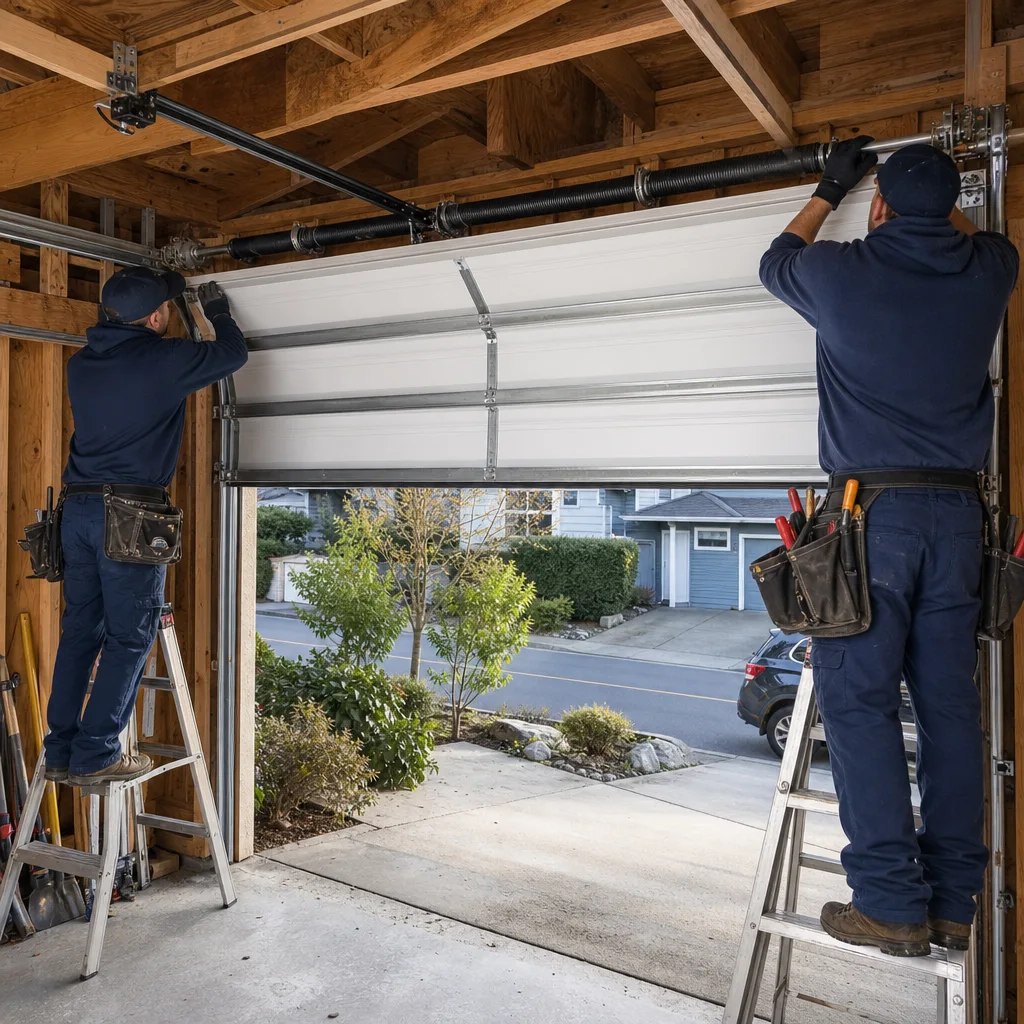
Homeowners describe noises inconsistently. Here’s what we hear in Tacoma field calls, mapped to the actual component.
| Noise Description | Component Implicated | Urgency Tier | Typical Cause |
|---|---|---|---|
| Grinding, metal-on-metal | Opener drive gear or stripped trolley carriage | Tier 2 | Worn nylon gear on screw-drive or chain-drive opener; trolley carriage teeth stripped from door binding |
| Popping or snapping during open/close | Torsion spring or extension spring | Tier 1 if single loud pop; Tier 3 if small pops | Spring coil binding and releasing; early fracture propagation |
| Scraping or dragging | Door seal, track misalignment, or roller failure | Tier 2 | Seal dragging on floor; roller bearing seized; track out of plumb |
| Squealing or squeaking | Dry rollers, hinges, or bearings | Tier 3 | Lack of lubrication; roller bearings drying out |
| Rattling or vibrating | Loose hardware, opener mounting, or wind load | Tier 2 if hardware; Tier 3 if wind-related | Nuts backing off hinges or track brackets; opener header bracket loose |
| Thumping or rhythmic bump | Damaged door section or roller jumping track | Tier 2 | Dent causing roller to bump track joint; roller flat-spotted from binding |
Important distinction: A single loud pop from the spring area, followed by a door that feels heavy or slams - that’s Tier 1, broken spring. Small, repeated pops during operation - that’s usually a spring coil binding against itself, Tier 3, but schedule inspection because it progresses.
The scraping noise deserves special attention in Tacoma. Our wet winters mean debris accumulates in the track: pine needles from Douglas firs, gravel from driveway runoff, dried leaves. Before calling, vacuum the track with a shop vac and test again. If the scraping persists, it’s mechanical, not debris.
Tacoma-Specific Corrosion and Climate Warning Signs
Standard garage door guides written for national audiences miss corrosion patterns specific to the South Sound, which is why we publish more guides & resources for local homeowners. Our marine west-coast climate - wet winters, salt air, occasional freeze-thaw - creates failure modes you won’t find in Arizona or Texas manuals.
Rust Bloom Pattern on Cable Drum Flanges
The cable drum is the grooved wheel at each end of the torsion tube that spools the lift cable. On its outer face, a flange retains the cable. In Tacoma, we regularly see a distinctive rust bloom on this flange - orange-brown staining that radiates outward from the set screw holes. This indicates moisture has penetrated the drum-to-shaft interface, often because the set screw was never properly sealed or has loosened.
The rust itself doesn’t immediately threaten function. But it signals that the drum is shifting on the shaft, which throws off cable spooling. Poor spooling causes cable overlap, which causes the cable to bind and fray - a Tier 1 condition. When we see this pattern during service in Ruston or along Marine View Drive, we check drum set screw torque and recommend replacement if the shaft is scored.
White Efflorescence on Concrete Threshold
That white, powdery deposit on your garage floor where it meets the door? It’s efflorescence - mineral salts leached from concrete by moisture migration. In Tacoma’s older neighborhoods like the North End and West End, many garage slabs were poured without vapor barriers. Groundwater pushes through, evaporates, and leaves salts behind.
The problem for your door: efflorescence builds up under the bottom seal, preventing proper contact. The seal rides over the deposit, creating a gap. Worse, the salts are mildly abrasive and degrade the seal material faster than normal wear. If you see this, scrape the deposit with a plastic putty knife (not metal - you’ll damage the seal), then monitor for recurrence. Persistent efflorescence may need a threshold seal with a larger contact footprint.
Galvanic Corrosion at Aluminum Track-to-Steel Bracket Junctions
Some modern track systems use aluminum horizontal tracks with steel mounting brackets. Where dissimilar metals contact in the presence of Tacoma’s atmospheric moisture, galvanic corrosion accelerates. The aluminum pits, the steel rusts, and the connection loosens. Look for white, crusty buildup at track bracket joints - that’s aluminum oxide, not rust. Log it. When the bracket bolt loosens beyond adjustment, the track goes out of plumb.
Freeze-Thaw Cycle Damage to Bottom Sections
Tacoma’s winter temperatures hover near freezing just enough to matter. Water seeps past a degraded bottom seal, freezes in the hem of the bottom door section, and expands. The steel or aluminum hem cracks, or the section delaminates if it’s a composite construction. In January and February, we see this in low-lying areas like the Port of Tacoma vicinity and along the Puyallup River floodplain where groundwater is high. The warning sign is a bottom section that looks “pregnant” or bulged at the bottom edge.
Documentation Protocol: Photograph Before You Call
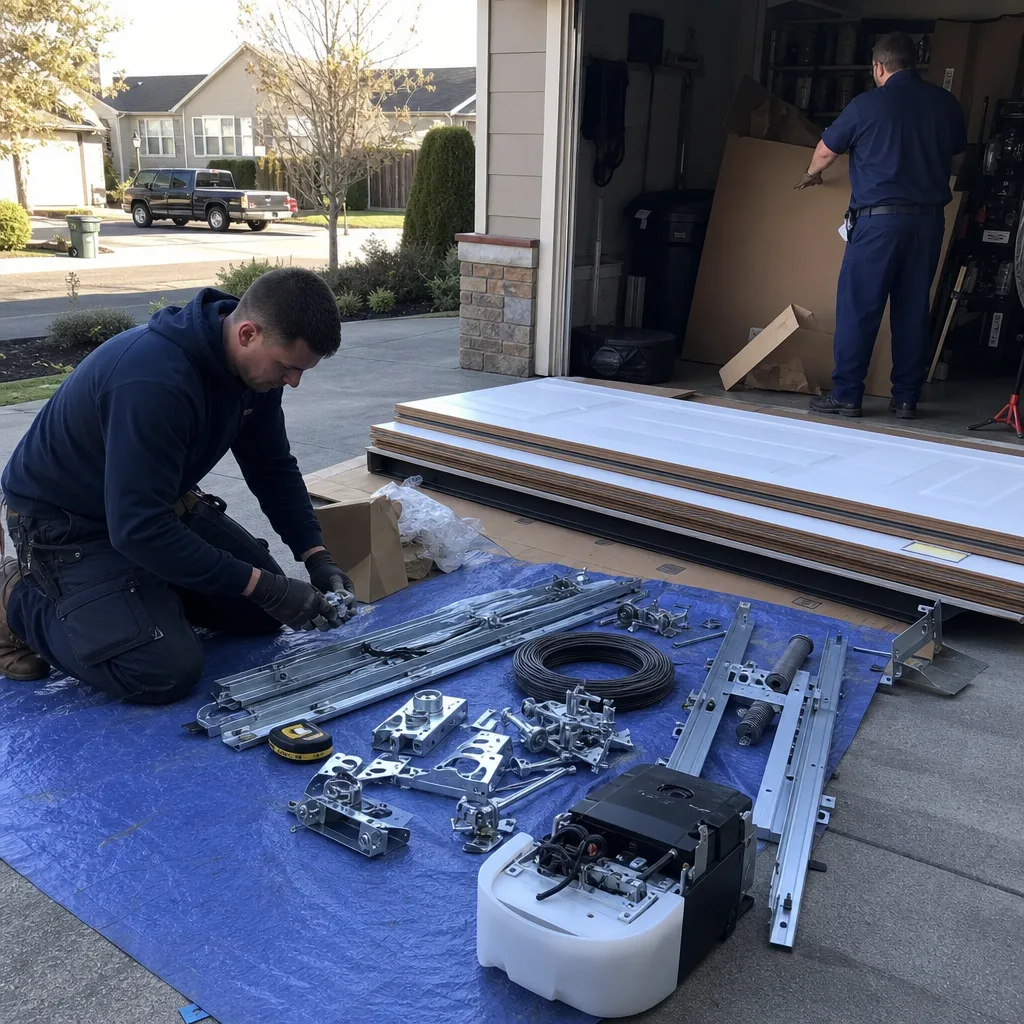
This is where Servo’s approach differs from standard practice. Since our founding in 2015, Clause 4 of The Haven Standard requires our technicians to photograph the failed component before quoting a replacement. The customer sees the evidence before anyone names a price. But you can start the documentation before we arrive, and it helps in ways most homeowners don’t consider.
- Photograph the warning sign with a timestamp. Use your phone’s camera with location and date stamp enabled. Capture the component in context - not just a close-up of the crack, but the crack in relation to the whole assembly. This establishes the condition existed before any contractor touched it.
- Photograph the door’s context. Wide shot showing the full door, opener model label, and any adjacent damage. If a cable is frayed, show where it runs from drum to bottom bracket. If a spring is broken, show both the gap and the spring anchor bracket.
- Record the door’s behavior on video if intermittent. A 15-second video of the door reversing, or the opener straining, is worth more than your verbal description. Upload it to cloud storage - don’t rely on the phone’s local copy.
- Note recent weather and usage changes. “Heavy rain three days ago, then the door started binding.” “Hadn’t used the door for two weeks while away, now the spring is broken.” This context helps distinguish climate-related failure from wear-related failure.
- Gather any prior service records. Previous invoices, warranty paperwork, or photos from prior repairs. If a spring broke after 18 months, the warranty status matters. If a different company did the last repair, their work may be relevant.
Why this matters for warranty and dispute resolution: If a repair fails within the warranty period, your documentation of the original condition proves whether the failure is related to the prior work or a new issue. If a contractor disputes whether a condition pre-existed their service, timestamped photos settle it. We’ve seen this protect homeowners in Tacoma’s active real estate market, where garage door condition disputes arise during home sales.
When you call Servo Garage Doors Tacoma home, you can text your photos ahead. Our dispatcher routes them to the assigned technician, who arrives with context and the right parts on the truck.
Common Mistakes to Avoid
- Testing a suspected broken spring by disconnecting the opener and lifting manually. A broken spring makes the door weigh 150+ pounds. Even if you’re strong enough to lift it, you can’t control it if it slips. The manual lift test is for verifying balance on a healthy door, not diagnosing failure.
- Ignoring a “small” cable fray because the door still works. Cables fail catastrophically, not gradually. A few broken strands today means total failure under load tomorrow. In Tacoma’s salt air, the progression accelerates.
- Applying WD-40 to rollers, hinges, or the track. WD-40 is a solvent and water displacer, not a lubricant. It strips existing grease, attracts dust, and dries to a sticky residue that makes binding worse. Use a lithium-based garage door lubricant or silicone spray. If you’re unsure what the previous homeowner used, clean the component and start fresh.
- Assuming a noisy door just needs “a tune-up” without identifying the noise source. “Tune-up” is vague. A grinding noise needs a drive gear inspection. A popping noise needs a spring inspection. Treating symptoms without diagnosis wastes money and misses the actual problem.
- Replacing the opener when the door is the problem. A heavy or binding door burns out openers. Installing a new opener on a door with bad springs or seized rollers guarantees premature opener failure. The door mechanics must be correct before the opener can work properly.
- Waiting for “one more season” on a door with visible Tier 2 signs. Tacoma’s wet fall and winter accelerate every failure mode. A sluggish door in September becomes a broken opener in January. Schedule before the weather turns.
- Accepting a verbal quote for spring or cable work. These repairs have standardized material costs and labor times. A contractor who won’t put the price in writing before starting either doesn’t know their costs or doesn’t want you to compare. Clause 1 of The Haven Standard exists because this shouldn’t be negotiable.
When to Call a Professional
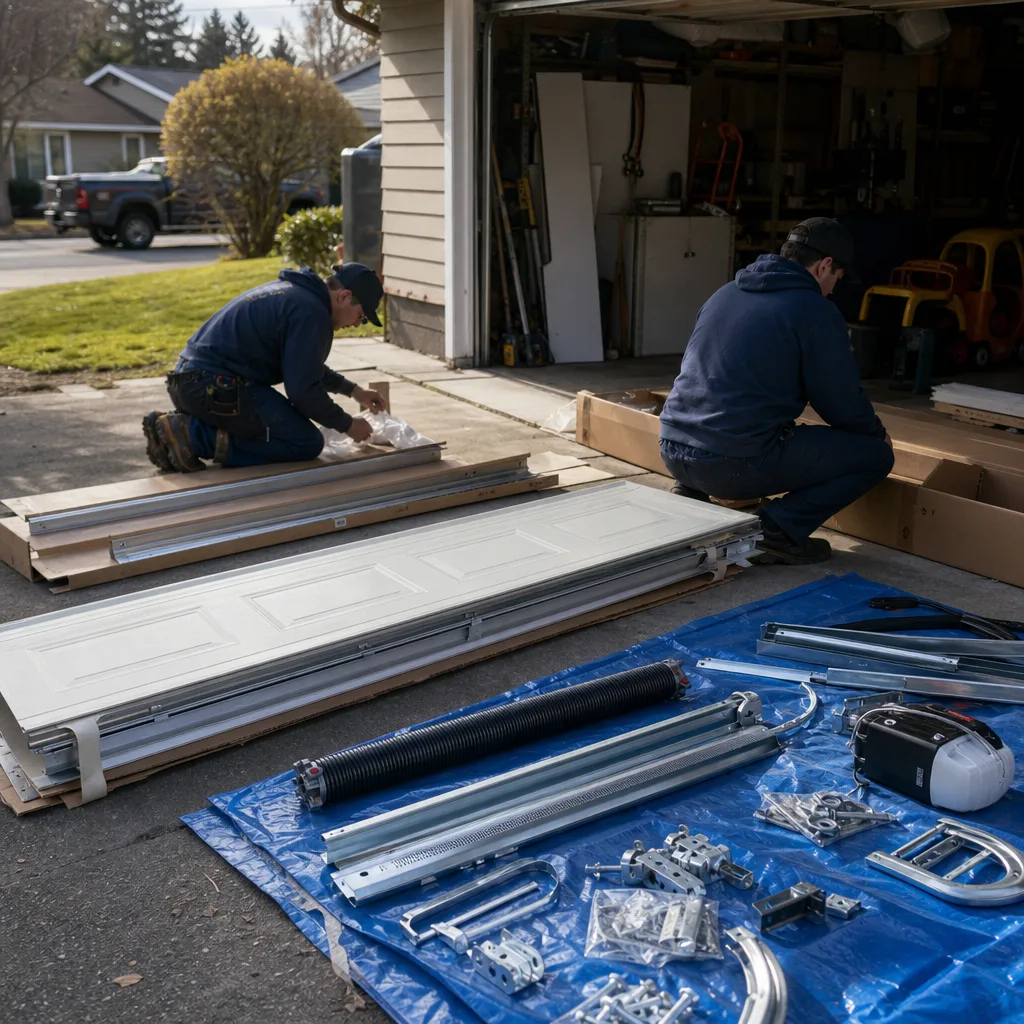
Call when any Tier 1 sign appears - no exceptions. Call when a Tier 2 sign progresses or multiplies: one issue is manageable, two or more concurrent failures suggest systemic wear. Call when you can’t confidently identify which tier a sign belongs to - misidentification is how injuries happen.
Servo Garage Doors Tacoma offers free estimates in Tacoma - call (253) 666-6264. Our calls are answered by a live person, 24/7, including holidays. Emergency calls get a named technician and an on-the-way text, not a callback window. Every visit includes a documented photo record of findings and completed work, delivered to you before we leave. The 365-Day Done Right Promise means if a repair isn’t right, we make it right, backed by The Haven Standard and a terms page, not a handshake.
Garage Door Installation in Tacoma may be the better long-term solution if your door is over 20 years old and showing multiple Tier 2 and 3 signs simultaneously. We provide written pricing for both repair and replacement scenarios so you can compare.
Frequently Asked Questions
Torsion spring replacement in Tacoma typically costs $180-$340 for a standard single-car or double-car residential door, including the spring, winding cones, and labor. Extension spring systems run slightly less, $140-$280, but are less common in modern installations. Servo delivers a flat, written price before any work starts - Clause 1 of The Haven Standard - so the price you agree to is the price on the invoice. Call (253) 666-6264 for an exact quote; estimates are free.
Yes. A torsion spring stores enough energy to lift several hundred pounds. When it breaks, that energy releases instantly. A door with a broken spring can slam shut unpredictably, and the broken spring itself can whip if touched. Do not operate the door, do not stand near the spring assembly, and do not attempt DIY replacement. The wound spring must be safely unwound with proper tools and training. This is why we include a specific safety caveat in every spring-related service call.
Look for visible fraying - individual strands protruding from the cable braid - or a cable that has begun to unwind from the drum. A healthy cable has tight, uniform braiding with no loose wires. In Tacoma’s marine climate, also check for rust staining on the cable, particularly where it contacts the bottom bracket. Cables don’t give gradual warning before final failure; fraying is the warning. If you see it, stop using the door and call for service.
The reversal is not random - it’s the opener’s safety system responding to a trigger. Common causes: misaligned or dirty photo-eyes (the sensors near the floor), excessive door friction triggering the force limit, a damaged safety edge, or in some cases a failing logic board sending false signals. In Tacoma, we’ve also traced reversals to moisture in the photo-eye wiring after heavy rain. Check the photo-eye alignment first: both sensors should show steady LEDs, not blinking. If alignment doesn’t fix it, the cause is mechanical or electrical and needs professional diagnosis.
A well-maintained steel or composite door should last 20-30 years in Tacoma. The limiting factors here are spring life (typically 10,000 cycles, or 7-12 years for average use) and corrosion of hardware and bottom sections from moisture exposure. Doors in salt-air exposure zones like Ruston, Browns Point, or along Commencement Bay may see faster hardware degradation. Regular lubrication of moving parts and prompt seal replacement when gaps appear extend service life significantly. We service all major brands including Chamberlain, Genie, Clopay, and Amarr installations.
Replace when the door has multiple concurrent failures (spring, cables, opener, and sections all showing problems), when replacement parts are obsolete for the door’s age, or when energy efficiency and curb appeal improvements justify the investment. Repair when the failure is isolated to one or two components and the door structure is sound. We offer free second opinions on any written estimate from another company - bring the paperwork, no coupon required. For new doors, Garage Door Installation in Tacoma includes free measurement and written pricing with no deposit to schedule.
The Bottom Line
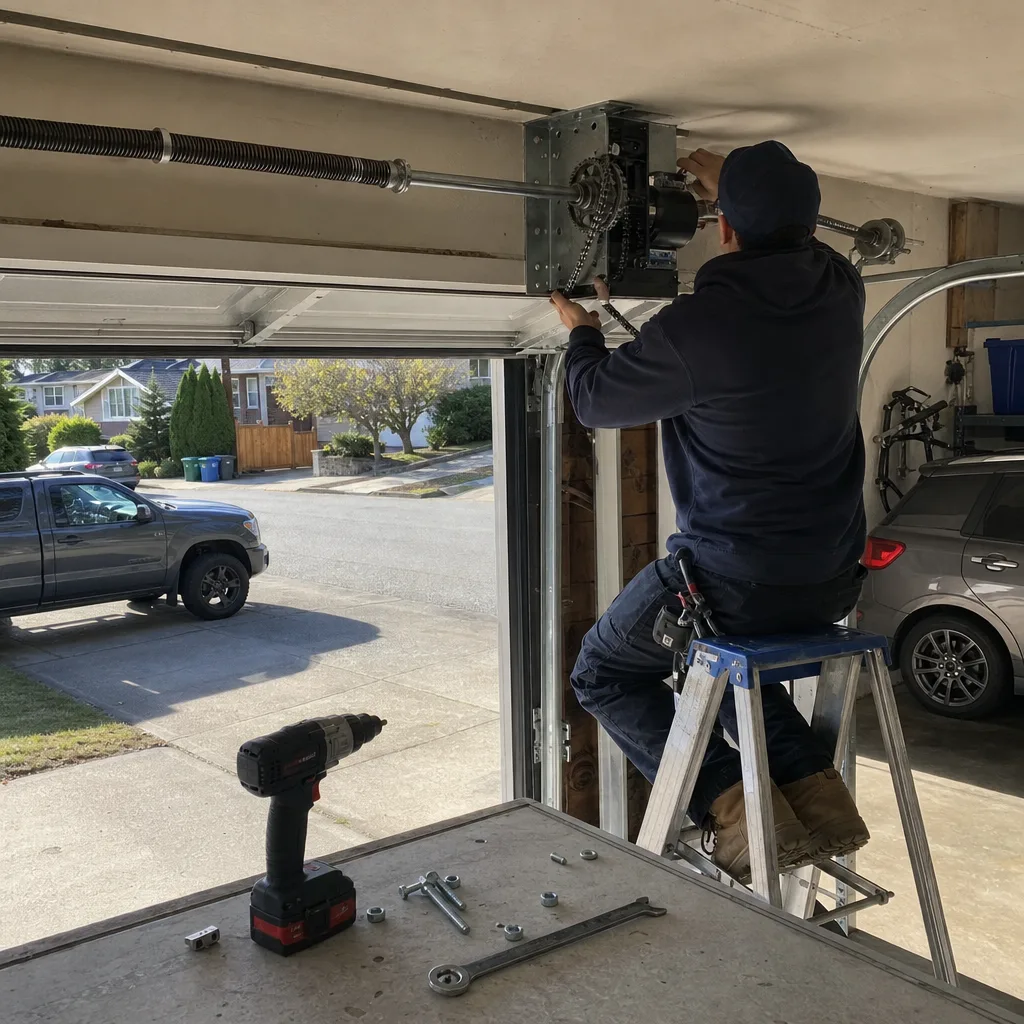
Garage door warning signs are only useful when ranked by urgency. The same symptom - a reversing door, a loud noise, a sluggish response - can mean a zero-dollar adjustment or a stop-use-now safety hazard. This guide gives Tacoma homeowners the framework to tell the difference: Tier 1 means stop and call today, Tier 2 means schedule within two weeks, Tier 3 means log and monitor. The specific component matters, the documentation protects you, and Tacoma’s marine climate creates corrosion patterns that standard national guides miss. When you’re uncertain which tier applies, err toward caution. A photographed, timestamped record and a flat written price before work starts - Clause 1 and Clause 4 of The Haven Standard - are your best protection against both safety risk and billing surprise.
Written by Marcus Deller, Owner at Servo Garage Doors Tacoma, serving Tacoma since 2015.